Tag: tensor

  • Google Pixel Watch 5 rumors: launch, price, and features

    Google Pixel Watch 5 rumors: launch, price, and features

    The Pixel Watch 5 is anticipated to launch in late 2026. The Pixel Watch 4 was released in October of last year, despite Google’s August announcement. As of right now, there are no leaks that indicate when its replacement will be released.

    The pricing of the Pixel Watch 5 is anticipated to stay the same as that of its predecessor, with the Wi-Fi-only variant in the smaller size starting at $349. However, we haven’t yet received any information via leaks, so it’s still possible that Google will increase pricing.

    Google Pixel Watch 5 storage and design
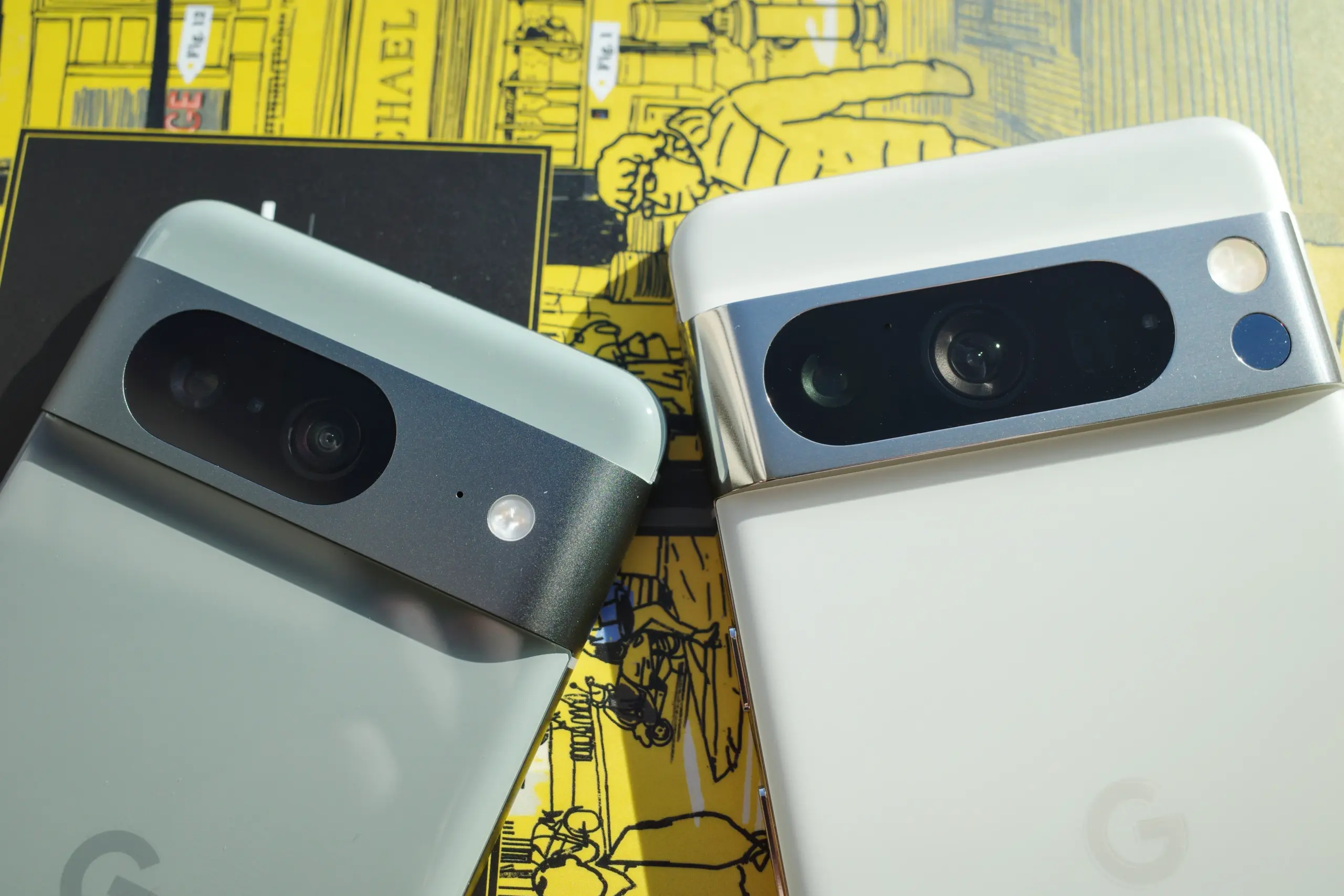
    Google Pixel watch 5 design

    The Pixel Watch 4’s 32 GB of storage is more than plenty for a smartwatch. We anticipate that its replacement will provide the same storage capacity.

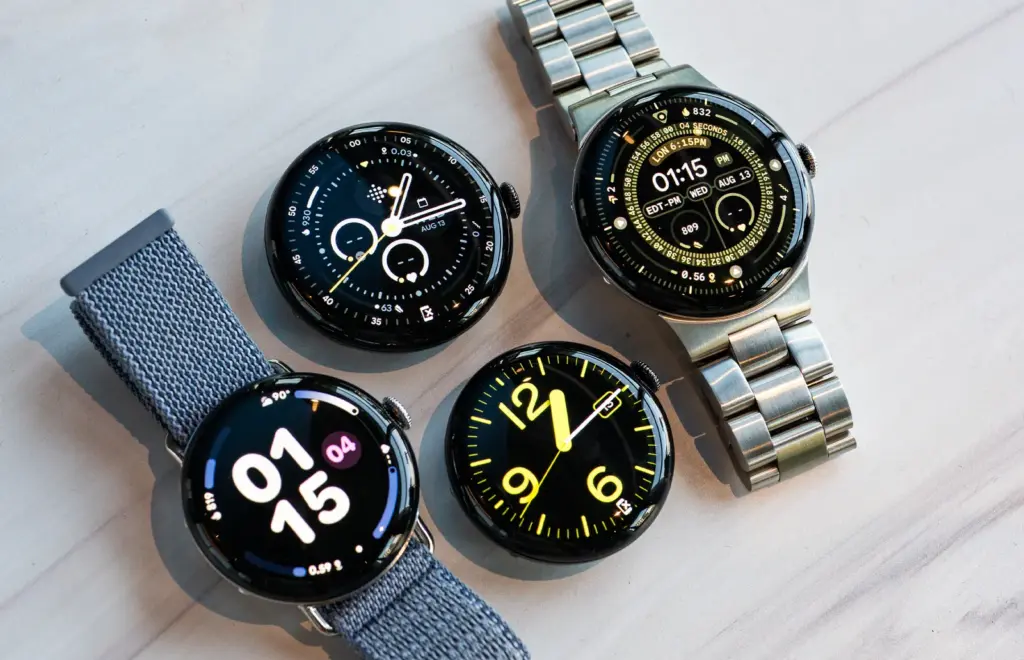
    The Pixel Watch 4 did not include a significant change. It did, however, bring about a change that many would value: the Pixel Watch 4 is repairable, so if its glass breaks, it is no longer something to discard.

    The Pixel Watch 5 will probably continue to be repairable. Like its predecessor, we anticipate that it will be rated IP68 or 5 ATM. Once more, we anticipate a distinctive, simple circle shape with two sizes (41 and 45 mm). According to several rumors, sapphire crystal durability may be improved.

    Along with new watch faces, we might also see some new hues.

    Pixel Watch 5 display

    The display of the Pixel Watch 5’s predecessor was improved, reaching a peak brightness of 3,000 nits. It’s safe to presume that this time around, the upgrades will be more modest, even though no leaks have yet revealed what we might anticipate.
    Google Pixel Watch 5 rumors: launch timing, price, and new features

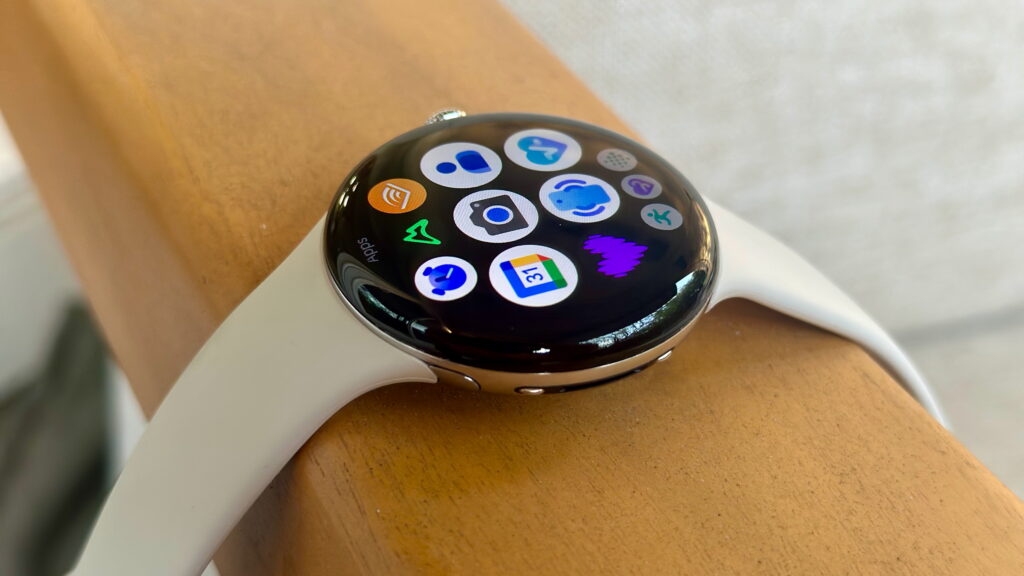
    For a more contemporary appearance, Google might further reduce the bezels (the Pixel Watch 4’s bezels were 16% thinner than last year). The Actua 360 domed display, which gives the entire display a sleek and distinctive appearance, was also included with the Watch 4.

    Battery and features

    According to rumors, the Pixel Watch 5 may concentrate on maximizing battery life because of its potential new processor. Although there haven’t been any updates regarding battery sizes, the Watch 4 has already made some improvements in this area, allowing the 45 mm model to survive up to 40 hours and the 41 mm model to last up to 30.

    Naturally, Google also provides Battery Saver, which further extends the watch’s battery life. Google introduced quick charging with the Watch 4, so it’s likely that this feature will remain as well.

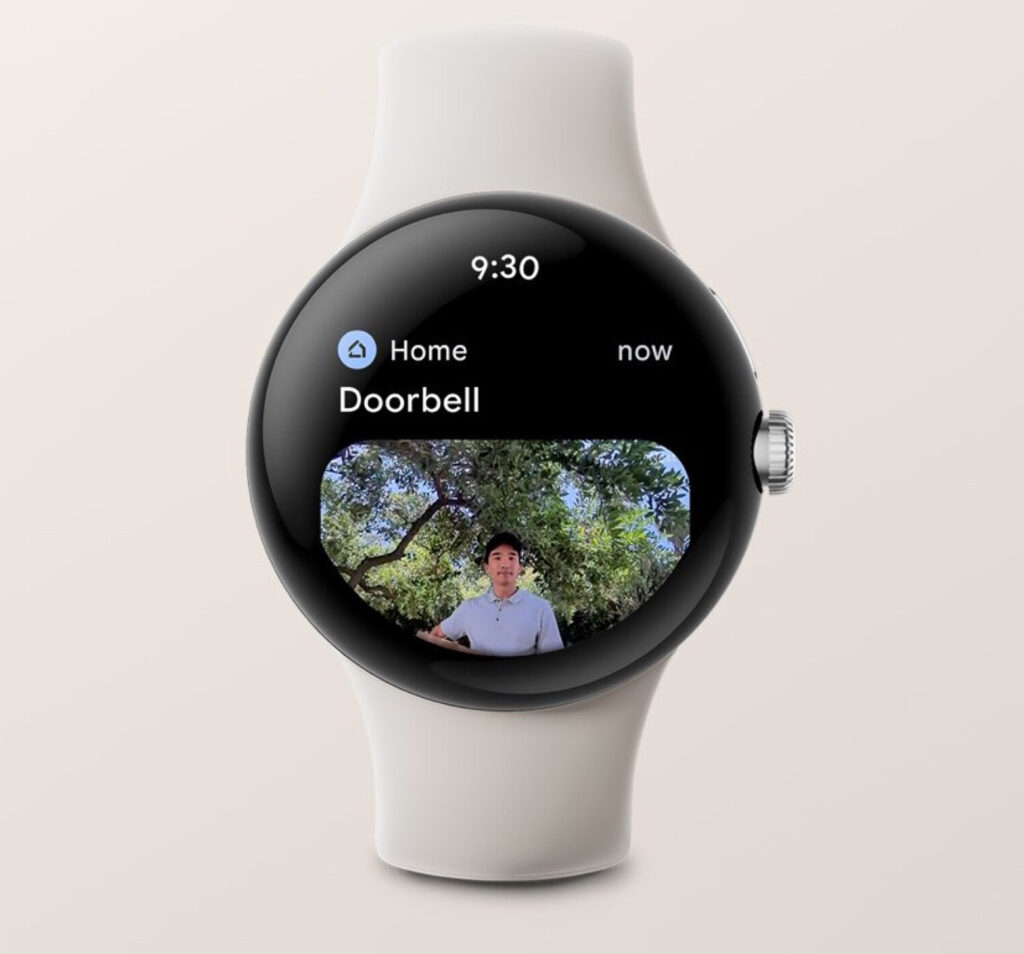
    Anticipate the same features from the previous year, such as fall and crash detection, emergency satellite communication, safety check, and emergency sharing. Along with the Pixel Recorder app and the Pixel Phone Camera Control, Google Maps and Wallet compatibility is probably on the horizon.

    Additionally, you’ll probably be able to benefit from more than 40 different forms of exercise as well as the Fitbit Morning Brief, which provides a daily summary of your health-related activities (sleep, readiness, and goal progress). Naturally, a personal AI Health Coach with Fitbit Premium will also be beneficial to you.
    google pixel watch 5 features

    Google Pixel Watch 5 specs

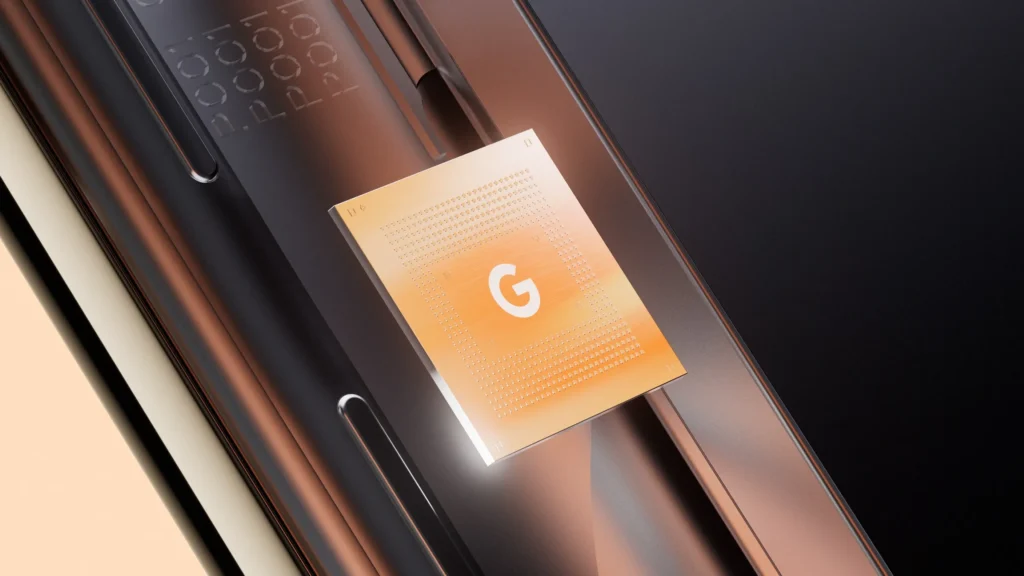
    The processor is the most intriguing component of the Pixel Watch 5’s hardware expectations. There are rumors that Google might select its own Tensor chip this time. The quick and powerful Qualcomm Snapdragon W5 Gen 2 was included with the Watch 4.

    If the reports are true, Google’s decision to use its own specially designed Tensor chip for the smartwatch could help it outperform earlier models in terms of efficiency and performance. Although we are unsure about the exact chip, it might be a Tensor made just for smartwatches rather than the Tensor G6 that is anticipated for the Pixel 11. However, the chip can be based on the phone processor.

    The next device’s battery life is expected to be improved by the new chip.

    It’s crucial to remember that Google can choose to stick with the Qualcomm chip for an additional year. This might theoretically be a W5 Gen 3 chip.

    Pixel Watch 5 rumored specs:

    • CPU: Potential Tensor chip, or chip from Qualcomm
    • Battery: 45 mm – up to 40 hours, 41 mm – up to 30 hours
    • Charging: 0-50% in 15 min.
    • Storage: 32 GB
  • Tensor G5 vs Tensor G4 – specs and benchmarks

    Tensor G5 vs Tensor G4 – specs and benchmarks

    Over the years, Google’s proprietary Tensor chips have progressively advanced to become a dependable everyday driver with strong energy economy. However, performance has frequently been a source of contention. Previous Tensor chips performed well on routine tasks, but not so well on intensive workloads like gaming. That might change with the upcoming Tensor G5, which promises notable performance improvements.

    “Tensor G5 is our greatest upgrade yet and gives a huge performance gain,” the tech giant claims. The newest Tensor chip, which launched with the Pixel 10 series last month, is said to feature a 30% faster average CPU and a 60% more potent TPU. Additionally, this is Google’s first mobile chipset produced at TSMC’s facility; Samsung previously produced Tensor chips. Better performance and increased battery economy are promised by the Tensor G5’s use of a more sophisticated 3nm manufacturing node.

    Will the Tensor G5’s major improvements, as promised by Google, significantly improve benchmark scores where earlier Tensor chips have underperformed? We’ll examine the benchmark numbers. Here is the specification document to view the differences on paper before that:

    Tensor G5Tensor G4
    AnnouncedAugust 2025August 2024
    Process nodeTSMC’s 3nm (N3E)Samsung’s 4nm
    CPU1x 3.78 GHz — Cortex-X4
    5x 3.05 GHz — Cortex-A725
    2x 2.25 GHz — Cortex-A520
    1x 3.1 GHz — Cortex-X4
    3x 2.6 GHz — Cortex-A720
    4x 1.92 GHz — Cortex-A520
    GPUPowerVR DXT-48-1536 GPU
    No ray tracing support
    Mali-G715 MP7 GPU
    No Ray tacing support
    NPUNew Google Edge TPUGoogle Custom TPU
    Memory
    Storage
    LPDDR5X
    Zoned UFS 4.0 (512GB+)
    LPDDR5X
    UFS 3.1
    ConnectivitySamsung Exynos 5400 5G modem
    Wi-Fi 7, Wi-Fi 6E
    Bluetooth 6.0
    Samsung Exynos 5400 5G modem
    Wi-Fi 7
    Bluetooth 6.0

    AnTuTu

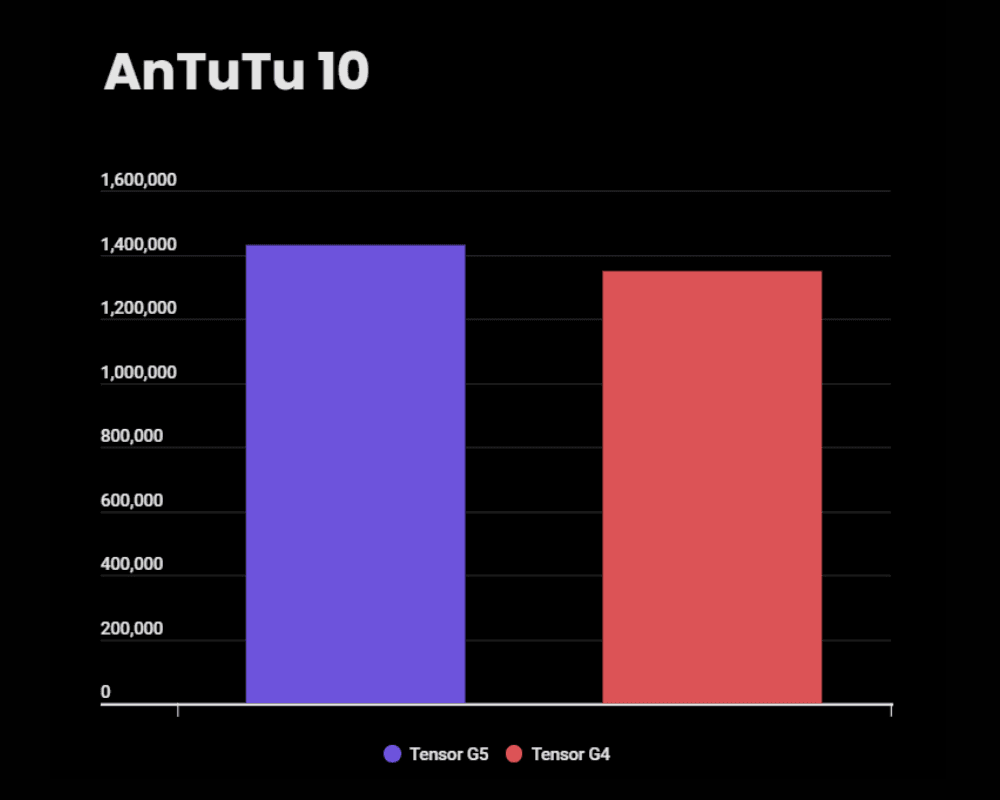
    According to the AnTuTu (version 10) benchmark, the new Tensor G5 chip has a little overall improvement of 6%, scoring 1,429,557 as opposed to 1,348,226 for the Tensor G4. However, there is a pleasant 20% rise in the CPU (483,989 vs. 401,746). The RAM and UX scores also favor the newer chip with an improvement of roughly 10%.

    The most unexpected of all is the GPU score, which is actually 10% lower than the G4 from the previous year. This implies that rather than promoting sheer graphics performance, Google might have placed greater emphasis on efficiency.

    Tensor G5Tensor G4
    AnTuTu score1,429,5571,348,226
    CPU483,989401,746
    GPU416,313462,415
    Memory293,467266,535
    UX235,788217,530

    Geekbench

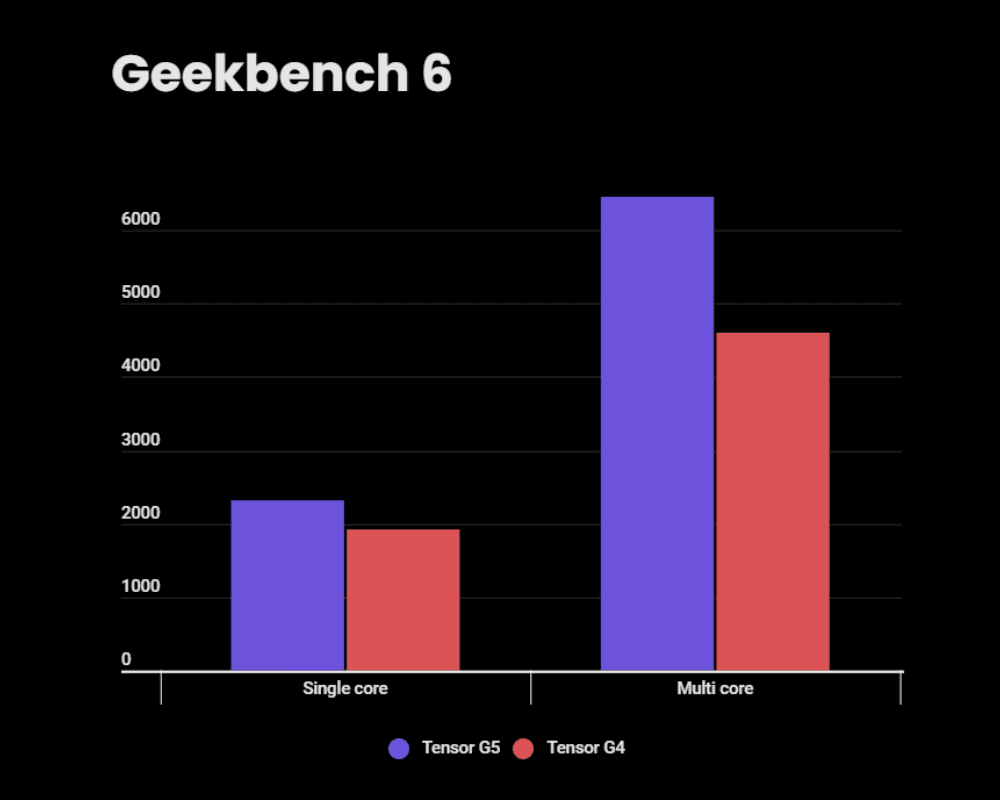
    The Tensor G5 clearly outperforms the Tensor G4 in Geekbench 6. Its 2,316 single-core test score is around 20% higher than the G4’s 1,923, indicating faster responsiveness for daily tasks like UI navigation and app launches.

    Stronger performance in multitasking, productivity apps, and heavier workloads is highlighted by the multi-core score, which soars to 6,452, a staggering 40% increase over the G4’s 4,602.

    Overall, the results from Geekbench point to encouraging gains in Tensor G5’s raw CPU performance, particularly in multi-core efficiency, which could result in considerably more fluid performance.

    G5G4
    Single core2,3161,923
    Multi core6,4524,602

    3DMark score

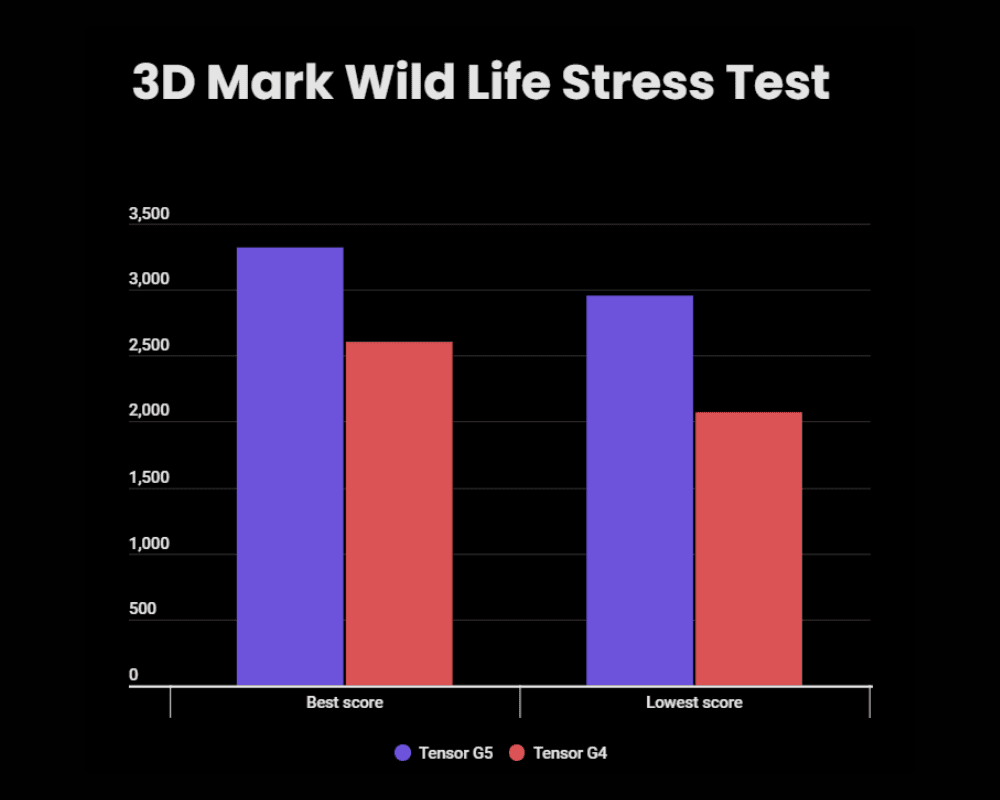
    In the 3DMark Wild Life Extreme Stress Test, which gauges sustained GPU performance under high load, the Tensor G5 clearly outperforms the Tensor G4. With a highest loop score of 3,319 as opposed to 2,603 for the G4, the G5 scores an astounding 27% improvement in peak graphics performance.

    More significantly, the G5 offers improved consistency as well. The G4 descends to 2,071, and its lowest loop score is 2,954. 89% vs. 79.6% is not only better performance, but also significantly more stability. As a result, the Tensor G5 is far less likely to experience thermal throttling and ought to offer more consistent, fluid gaming over extended periods.

    Tensor G5Tensor G4
    Best loop score3,3192,603
    Lowest loop score2,9542,071
    Stability89%79.6%

    Tensor G5 vs Tensor G4

    Thanks to enhanced CPU cores and more sophisticated TSMC manufacturing, the Tensor G5 exhibits encouraging improvements in CPU performance. GPU performance and consistency have also significantly improved, according to the 3DMark test. A better gaming experience and faster daily performance should follow from this. The majority of the heating and throttling problems users had with earlier Tensor chips are likewise fixed by the new chip.

    Even while the latest Tensor chip offers significant improvements, Google still needs to catch up in order to compete with Qualcomm and MediaTek’s top offerings. We have contrasted the Snapdragon 8 Elite and Snapdragon 8 Gen 3 with the Tensor G5. To see how Google’s most recent chip compares to the finest in the business, you can look through those comparisons.

  • The largest battery in a Pixel device will be found in the Google Pixel 10 Pro XL

    The largest battery in a Pixel device will be found in the Google Pixel 10 Pro XL

    The design of Google’s next Pro series phones, the Pixel 10 Pro and Pixel 10 Pro XL, will remain similar to that of the Pixel 9 Pro from the previous year—almost identical, in my opinion. According to Android Headlines, the Pixel 10 Pro XL will have a 6.8-inch screen with a higher PMW, while the Pixel 10 Pro will have a 6.3-inch screen.

    Both have a maximum brightness of 3,000 nits and employ LTPO technology with refresh rates ranging from 1 to 120 Hz. Each device’s front and rear are covered by Corning’s Gorilla Glass Victus 2.

    The latest Tensor G5 processor and 16GB of RAM are used inside both Pro variants. The primary distinction is in storage: the Pixel 10 Pro will come with 128GB, 256GB, 512GB, and 1TB variants, albeit not all colors will support 1TB. The Pixel 10 Pro XL will only come with 256GB, 512GB, and 1TB of storage instead of the 128GB option.

    With a 50-megapixel primary camera, a 48-megapixel ultrawide, and a 48-megapixel 5x telephoto lens, the camera configuration is essentially the same as it was the previous year. There will be macro capabilities for both telephoto and ultrawide cameras.

    Surprisingly, the Pixel 10 Pro’s 4,870mAh battery is marginally smaller than the Pixel 10’s, most likely due to the larger cooling vapor chamber. According to the source, the Pixel 10 Pro XL would have the biggest Pixel battery ever—5,200mAh. Given that the Pro XL is supposedly just a larger version of the Pro, I think the 29W and 39W charging speeds for the Pro and Pro XL are a significant difference.

    Stay connected with the latest from Droid Tools—follow us on X @droid_tools, like our page on Facebook, check out our updates on Instagram, and follow us on Google News for real-time news, device tips, and mobile tech insights.

  • Google Tensor G5 comes on 3nm build and a new GPU

    Google Tensor G5 comes on 3nm build and a new GPU

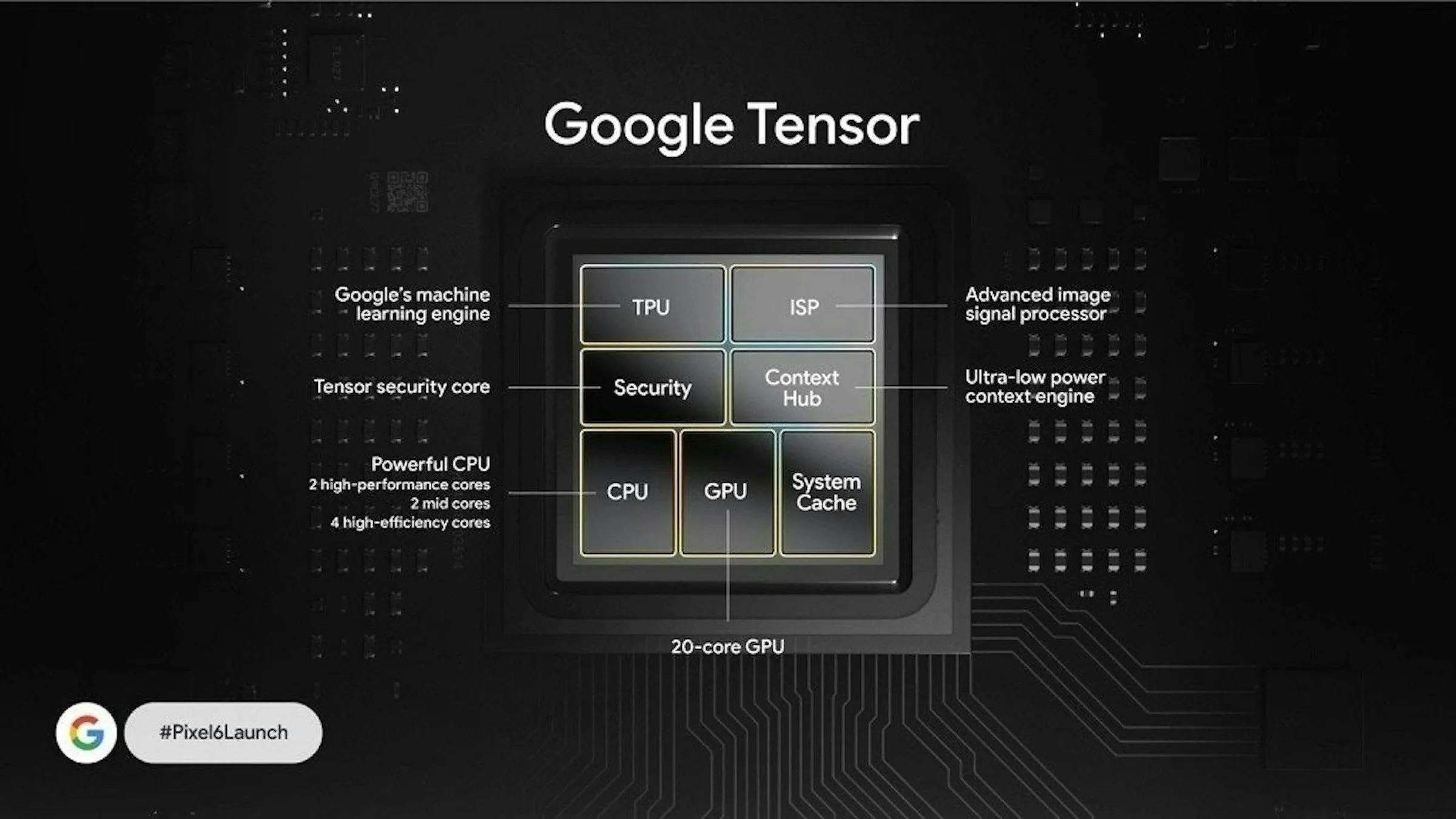
    According to reports, Google’s Pixel 10 series will use the Tensor G5 as its next processor. According to reports, it will be manufactured under the codename “Laguna” under a multi-year agreement with TSMC, which would completely replace Samsung. There have been major architectural modifications in this flagship processor.

    According to reports, the Google Tensor G5 has an 8-core CPU and makes use of TSMC’s 3nm node. One Cortex-X4 prime core at 3.4 GHz, three to five Cortex-A725 performance cores at roughly 2.85 GHz, and two to four Cortex-A525 efficiency cores at 2.4 GHz are typical configurations, though reports vary significantly. Using the Cortex-A725, the design prioritizes efficiency and long-term performance, which is further improved by the 3nm technology. The goal of switching to more modern efficiency cores is to enhance the user experience in general.

    google tensor g5 soc

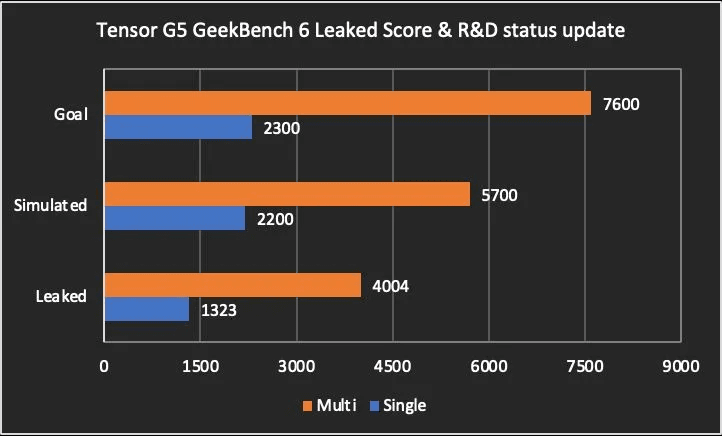
    A single-core score of roughly 1323 and a multi-core score of roughly 4004 are displayed in the leaked Geekbench 6 results. These are preliminary findings, but they fall short of the Tensor G4’s scores (about 1950 single-core and 4741 multi-core).

    There is potential for improvement through software optimization, as indicated by projected scores of 2200 single-core and 5700 multi-core, as well as a company objective of maybe surpassing 2300 single-core and 7600+ multi-core. Early software optimization or certain test setups could be the cause of the initial lower scores. In early incarnations, the emphasis on a more efficient production process may put power efficiency ahead of peak performance.

    Despite architectural modifications and the switch to a 3nm technology, early benchmarks indicate that the Tensor G5 might not much outperform its predecessor in Geekbench 6. The particular setups of the testing devices or early software optimization may be to blame for this. In early generations, the shift to a more efficient manufacturing process may put power efficiency ahead of peak performance benefits.

    The Tensor G5 is anticipated to include a dual-core Imagination Technologies IMG DXT-48-1536 GPU clocked at 1.1 GHz, whereas the Google Tensor G4 used an Arm Mali-G715 MP7 GPU. This marks a substantial shift away from Google’s prior dependence on Arm Mali GPUs. This points to a change in strategy, either motivated by discontent with Mali’s performance in some domains or a keen interest in the capabilities of the IMG DXT.

    The highest level in the Ray Tracing Level System (RTLS), Level 4 ray tracing, is supported by the IMG DXT GPU, allowing for powerful visuals with low power consumption. This attempts to give the Pixel 10 more lifelike and captivating visual and gaming experiences. Users that value visual quality and game performance will find Level 4 ray tracing’s cutting-edge visuals appealing.

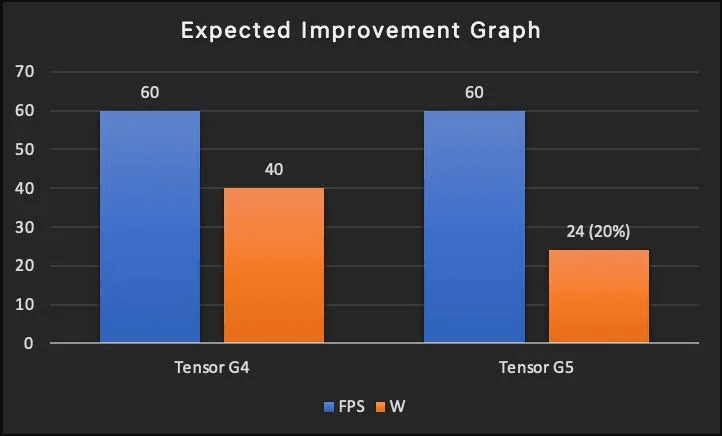
    Power efficiency is a key component of the IMG DXT, and its successor, the DXTP, offers up to 20% more power efficiency (FPS/W). Although DXT is used by the Tensor G5, this suggests a common pattern in Imagination’s designs. By switching to IMG DXT, the Pixel 10’s graphics subsystem may become more power efficient, which could solve a persistent problem with Tensor-based devices’ short battery life. A major benefit would be increased power efficiency over the Mali-G715 MP7.

    Stay connected with the latest from Droid Tools—follow us on X @droid_tools, like our page on Facebook, check out our updates on Instagram, and follow us on Google News for real-time news, device tips, and mobile tech insights.

  • Rumors about a custom camera for Tensor G5 in Pixel 10

    Rumors about a custom camera for Tensor G5 in Pixel 10

    Tensor G5 is expected to include a number of off-the-shelf components to replace Samsung-made parts of previous chips, including the use of a totally bespoke ISP, as part of Google’s decision to move its Tensor production to TSMC for this upcoming generation.

    Since the beginning, Tensor chips have mostly been a combination of components created or built by Google and those made by Samsung. This is because Google has used Samsung’s foundry and Exynos chips to help make Tensor a reality. However, as has long been known, Tensor G5 in the Pixel 10 will use TSMC instead of Samsung, creating certain gaps in Google’s chip manufacturing process.

    According to a new report from Android Authority, there are a handful of off-the-shelf components that Google will be switching to.

    tensor g5 camera on google pixel 10

    According to reports, Tensor G5 will keep using a number of Google’s current designs (with improvements) that were included in Tensor G4 and other earlier Samsung-made chips, such as the TPU, DSP, memory compressor, and audio processor. However, it will have to swap out a few parts to make room for the switch to TSMC, including:

    • GPU: Arm Mali > Imagination Technologies DXT
    • Video codec: Google “BigWave” & Samsung MFC > Chips&Media WAVE677DV
    • Display controller/2D GPU: Samsung DPU > VeriSilicon DC9000
    • Image Signal Processor: Google-customized Samsung ISP > Fully custom Google ISP
    • Physical layer controllers: Samsung > Synopsys DesignWare IP cores
    • SPMI controller: Samsung > SmartDV SPMI
    • PWM controller: Samsung > Faraday Technologies FTPWMTMR010
    • UFS controller: Samsung > Unknown third-party

    The ISP is the most noticeable change here, since Google is reportedly developing a completely unique approach. Beginning with the 2017 “Pixel Visual Core” in the Pixel 2 series, Google has utilized its own ISP in a number of Snapdragon-powered Pixel phones. Prior to Google releasing the proprietary chip before Tensor’s 2021 launch, that developed into the “Pixel Neural Core” with the Pixel 4.

    The end user will not likely notice many of the component changes Google is making, but it will be fascinating to observe if the different swaps have any positive or negative effects. The replacement of the current Samsung choices with a MediaTek modem is another noteworthy change that was previously publicized.

  • 36 hours of battery on Tensor G6, possible?

    36 hours of battery on Tensor G6, possible?

    Google discusses issues consumers have faced with previous generations when creating the Tensor G6 for the Pixel 11 series, and battery life is predictably a factor. Google discusses how less than 86% of Pixel 6/7 users survived the day in Tensor G6 design/planning docs that Android Authority was able to view (original text: “Pixel 6/7 generation < 86% MITTD”).

    “Battery life is always at the top of conjoint research,” the statement reads. Along with the notion that “Good battery life attracts user & drives loyalty with increased satisfaction,” none of that is really shocking.

    Of note is a line about how “Users expect 36 hrs of battery life.” In context, that’s presumably what Google found after surveying users. 

    It is unclear if Google intends to fulfill that expectation with Tensor G6 and Pixel in the future or if it is merely something they are considering. Google boasts “24+ hour battery life” on the specs list for the Pixel 9 series, yet the Pixel 6 Pro-8 Pro has “Beyond 24-hour battery life.

    Tensor G6 and Pixel

    The Extreme Battery Saver life has increased each time, reaching up to 100 hours this year after reaching up to 48 hours on the 6 Pro and 72 hours on the 7/8 Pro.

    If a user forgets to charge their phone overnight, the 36-hour battery life may allow them to continue with their day. Accidents do occur, but most people are now conditioned to plug in at the end of the day. The remainder of the paper discusses the necessity of lowering the chip’s price since “Tensor based Pixel applications have not accomplished our financial targets.” In particular, “~$65 to make this business viable” is the goal.

    To achieve that, the aim is to make Tensor G6 physically smaller than the G5 (121 mm² to 105 mm²), and removing various components. For example, the GPU will drop ray tracing support after introducing it a generation earlier. Other examples include removing cores and reducing caches across the chip. Of course, none of this is finalized yet. 

  • Save significantly on post-Prime Day price on the Pixel 8 256GB.

    Save significantly on post-Prime Day price on the Pixel 8 256GB.

    Even if October Prime Day 2024 is gone, you can still get a brand-new Pixel 8 phone at a great discount! Even after the promotion has officially concluded, there is still a significant discount available on the Pixel 8 with 256GB of storage capacity.

    You may currently save $200 on this excellent phone, making your final payment less than $560. Although the current reduction is smaller than the $250 Prime Day discount, it is still comparable to the price during Amazon’s massive sale. This particular model was discounted by $250. Considering the discount and phone that this offer is valid for, we advise moving swiftly since it may expire shortly. Even though it is an older model, the Pixel 8 is still among the greatest phones available.

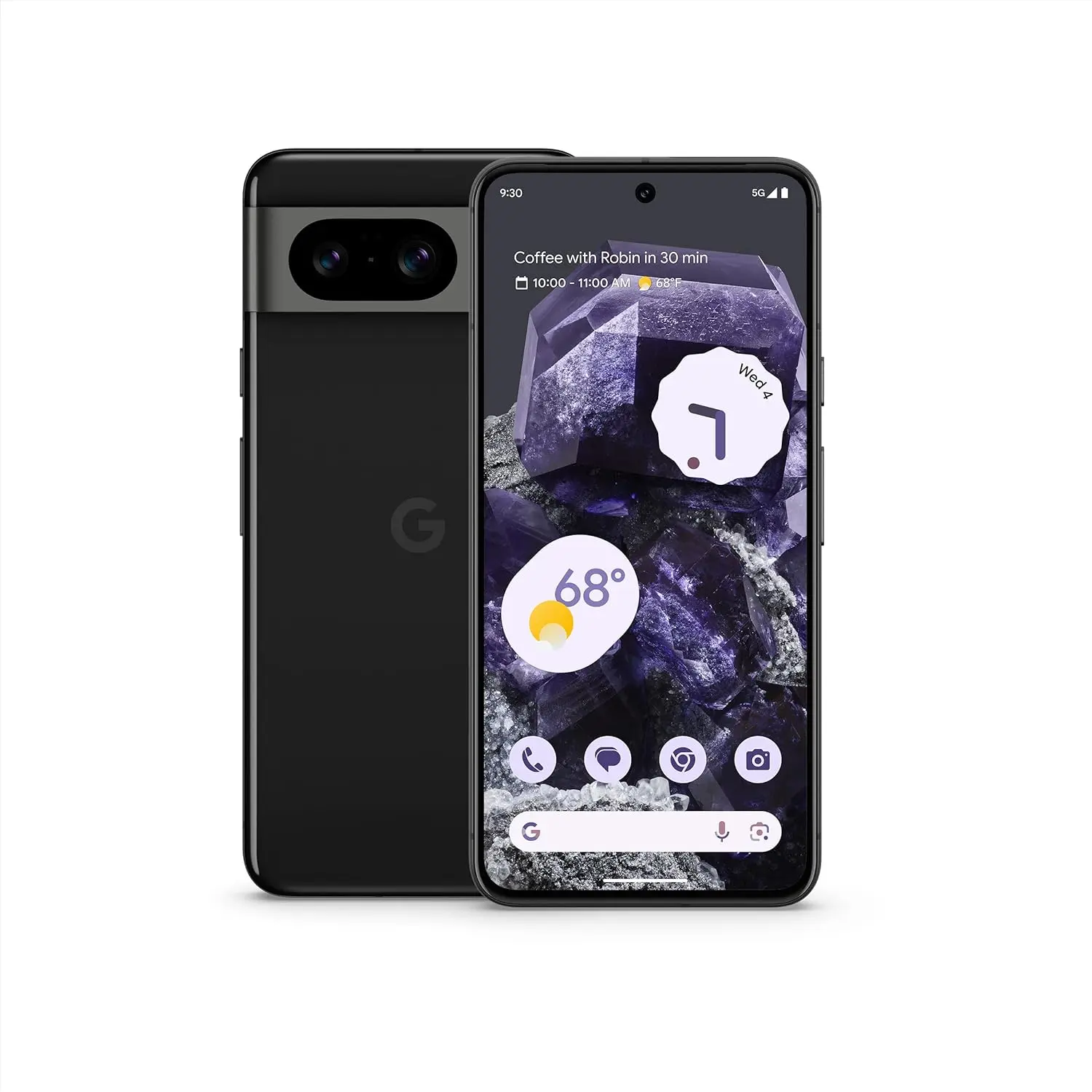
    Google Pixel 8

    Unlocked Android Smartphone with Advanced Pixel Camera, 24-Hour Battery, and Powerful Security – Obsidian – 256 GB

    759.00$531.56Buy now
    pixel 8 post amazon prime

    With its AI-powered Tensor G3 chipset and 8GB of RAM, it can handle most jobs with ease and offers fast performance. With a 50 MP primary camera, a 10.5 MP selfie camera, and, of course, Google’s magic image processing, it can also take beautiful pictures. It can also record videos in 4K at 60 frames per second.

    Additionally, battery life is remarkable! You will not need to plug it in for up to 9 hours and 36 minutes of video streaming or 15 hours and 39 minutes of web browsing thanks to the integrated 4,575mAh battery cell. Additionally, you will have an amazing viewing experience when lounging on your sofa thanks to the Pro-level 6.2-inch OLED display, which has a 2400 x 1080 resolution, a 120Hz refresh rate, and support for HDR10+.

    Overall, even with its post-Prime Day discount, the Pixel 8 is still well worth the money and cannot be missed. So save up now and grab this bad guy before it is too late!

    Google Pixel 8

    Unlocked Android Smartphone with Advanced Pixel Camera, 24-Hour Battery, and Powerful Security – Obsidian – 256 GB

    759.00$531.56Buy now

  • Pixel smartphones with Google Tensor chips are receiving a unique kernel update.

    Pixel smartphones with Google Tensor chips are receiving a unique kernel update.

    As noted by Mishaal Rahman on Twitter/X, Google appears to be working on updating the Linux kernel on all Tensor-powered Pixels. Specifically, the evidence presented suggests an update to version 6.1, which was released in December 2022 and is the second-to-newest version of the kernel, with 6.6 having been released in October 2023.

    Release of new software updates on a regular basis is one of the biggest selling points of a Pixel device, and it appears that Tensor-powered Pixels are about to receive a rare software update that updates the kernel used in the background.

    While there’s no word on what a kernel upgrade might change, this is notable for a couple of reasons.

    One of the comments mentions that “some Pixel devices” will be released with version 5.15 on “Android V,” which is Android 15. That also suggests that the timeline at play here is not in the immediate future but rather sometime after Android 15’s release. The 5.10 kernel version will see its end-of-life date in December 2026, so it most likely will not be too long after. For starters, this update would put all Tensor-powered Pixels on the same kernel. Pixel 6 and forward all ran on version 5.10 until the launch of Pixel 8, with 8 and 8 Pro running version 5.15.

    Updates to the kernel typically do not affect the user experience much, but they can have a significant impact on how your device functions. This includes performance and battery life. Custom kernels were a fairly common feature back when Android modding was more common.