With HyperOS 4, Xiaomi intends to make significant changes. The old MIUI code is entirely removed by the business. The system becomes more stable and quicker as a result. In August 2026, HyperOS 4 will be available. It turns into the initial “Zero-Legacy” version.
In HyperOS 3.1, Xiaomi begins to clear up outdated code. The MIUI SDK is eliminated from the Weather and Gallery applications. All legacy code from MIUI 1 to HyperOS 3 is removed. The system eliminates outdated dependencies and sluggish function calls. A new operating system is produced as a result. It decreases bugs and increases speed.
Key changes:
Removes MIUI backward compatibility layer
Uses only HyperOS SDK in all modules
Deletes over 10 years of old code
Makes updates faster and more stable
HyperOS 4 brings high-performance apps with Flutter and Rust
Xiaomi uses Rust and Flutter to rework key apps. The Weather app on HyperOS 3.1 checks this. These tools are extensively utilized in HyperOS 4. UI is made fluid via Flutter. Rust improves safety and speed. Versions of new apps are not available to older HyperOS users. This eliminates older phones’ backward compatibility.
Key features:
Flutter for standard UI rendering
Rust for secure and fast core code
Modular apps that update independently
Better stability on all devices
Small improvements are made to flagship phones. Large speed increases are seen in low-cost phones. Xiaomi resolves outdated code issues. The most stable experience in Xiaomi history is what it promises.
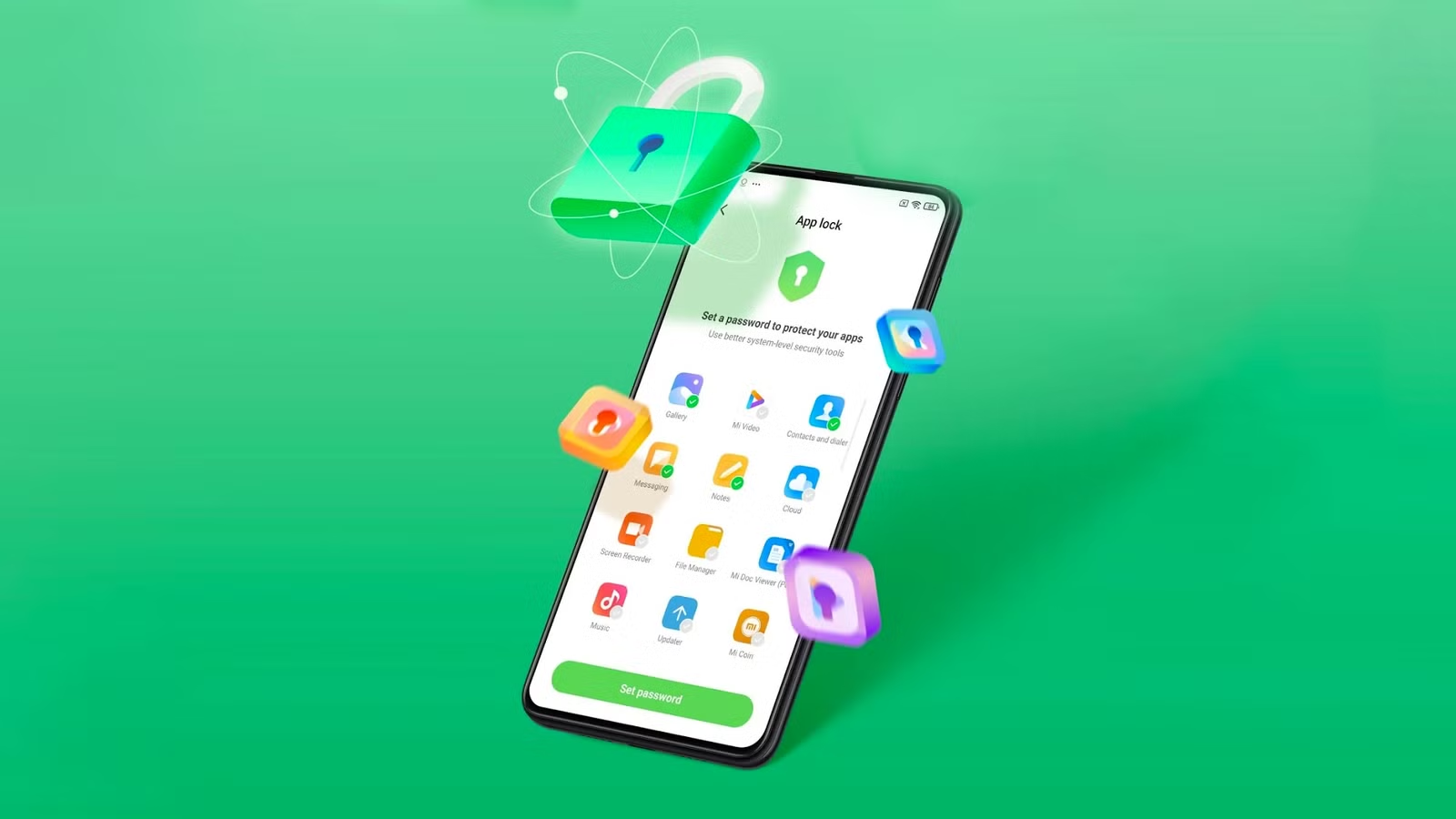
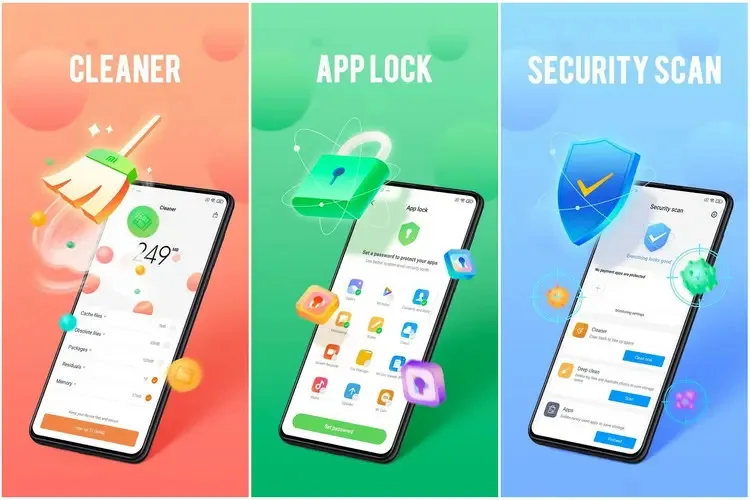
The Security V12 generation of Xiaomi’s standard Security app has finally been released with a significant update. The most recent build, V12.0.3-251114.1.1, is mostly concerned with modifications to the system infrastructure. However, as the new build offers a whole redesign of the Game Turbo interface and sophisticated system optimization logic, this would be quite intriguing for those waiting for the release of the next HyperOS stage. With this upgrade, Xiaomi is at last getting ready for a significant change in the management of background operations and the optimization of gaming performance on devices throughout the world.
Increased optimization in new Security V12
The Security V12 branch has been made available to the public for the first time with this build. The Security V12 series is a package deal of significant architectural improvements that align with next system versions, in contrast to the incremental updates that preceded it. The improved optimization engine, which promises to clear caches and free up memory without disrupting user activity, is especially noteworthy in the changelog. Thus, the move to version 12.0.3 would suggest that Xiaomi is preparing for more demanding software applications, maintaining devices’ responsiveness and fluidity during more taxing operations.
Enhanced gaming capabilities
However, the improved Game Turbo module is the most notable feature of this version. Performance modes and floating windows can now be accessed more quickly thanks to Xiaomi’s UI optimization. In order to prioritize frame rates and network stability during gameplay, new optimization algorithms operate in the background in silent mode. With much lower latency and input lag, enthusiasts who use their devices for competitive gaming will notice how much more seamless the transition from the game to system notific
How to update
To update the Security app on Xiaomi devices, open the Security app and scroll to the bottom until you see the Settings or About section. Tap Update (or Check for updates) if available. You can also update it through the GetApps store by searching for Security and installing the latest version. If the update doesn’t appear, make sure your phone is connected to the internet and running the latest MIUI/HyperOS system version, as some Security app updates are bundled with system updates.
Keeping system applications updated is very crucial for maintaining the security and performance stability of any device. Among such capabilities are unlocking hidden Xiaomi settings, updating other system applications seamlessly, and managing screen refresh rates, among the common updater features.
From background controls to looks, Xiaomi’s HyperOS offers consumers a great deal of customization options for their phones. Nevertheless, one tiny switch among all of these choices could stealthily drain battery life without your knowledge. Owners have recently complained of unexpected power consumption in user forums and on Reddit, even while their phones are just sitting on a desk.
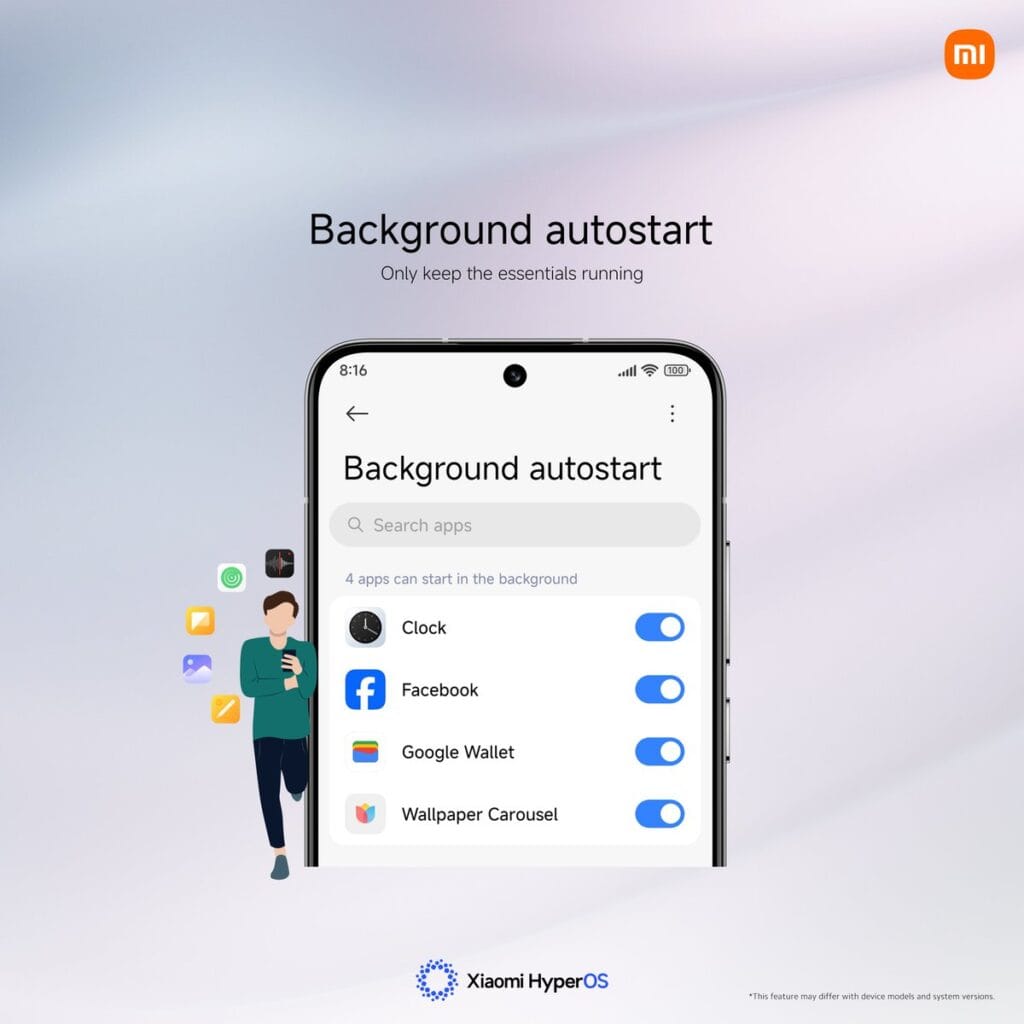
“App Autostart” is one feature that frequently appears. Its original purpose was to speed up the delivery of notifications in older MIUI systems. However, Xiaomi has already made improvements to HyperOS‘s notification system, so this choice is no longer as important.
Apps can operate automatically in the background when Autostart is enabled. Those apps continue to use memory and power even while you are not accessing your device. According to several users, turning off unnecessary autostart permissions can extend the standby duration of their phones by up to ten times.
How to Fix It in a Few Steps
You don’t need to be a tech expert to save battery life. Here’s the simple way to manage it:
Open Settings on your Xiaomi phone.
Tap Apps, then Permissions.
Select Background Autostart.
Check which apps are allowed to start automatically.
Turn off Autostart for any that aren’t essential.
It makes sense to limit the use of this feature to essential messaging apps like Telegram and WhatsApp. You can safely leave off tools you don’t use often, games, and shopping apps.
Other Easy Ways to Get More Battery Life
Turning off Autostart is a big help, but you can stretch your power even further by combining a few other habits:
Limit or disable Always-On Display to cut screen power use.
Use Dark Mode, especially on AMOLED screens.
Review notification permissions and mute apps that alert too often.
Shorten screen timeout so the display turns off faster.
Activate Battery Saver mode for less important apps.
A HyperOS developer recently explained on Xiaomi’s forum that small tweaks like these often have the biggest effect: “You don’t need deep settings knowledge—just consistency. Tiny adjustments add up to big savings.”
Key Points
“App Autostart” can drain battery silently in HyperOS.
Turning it off saves power and improves standby time.
Only key messaging apps should keep it active.
Combine small changes for longer daily use.
Xiaomi keeps battery controls simple but powerful.
Ultimately, practical flexibility is what Xiaomi strives for. Deep control is available when you want it, but the default settings are still user-friendly enough for everyone. A phone that drains quickly can be made to last from morning to night with a few well-considered adjustments.
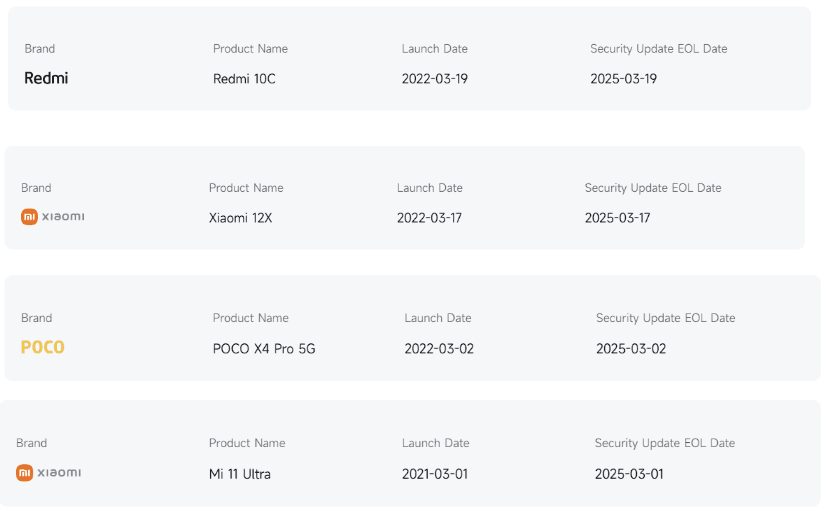
According to their Product Software Support Information page, Xiaomi has officially announced the end of security updates for some of its most popular products, marking a significant milestone for its fans throughout the world.
Although there is a strange silver lining for Xiaomi 11 Ultra customers, this move affects thousands of users who have been using these smartphones for their everyday digital demands. The decision represents the latest development in Xiaomi’s ongoing controversy surrounding its software support policy, which is ongoing despite the company’s success in maintaining older devices while giving priority to newer product lines.
Xiaomi devices reaching EOS
The Redmi 10C and Redmi 10 that have attained end-of-life (EOL) status running MIUI 14 based on Android 13 are among the devices on the list that would no longer receive security updates. For most users, that means they are no longer protected against recently found vulnerabilities, which may raise questions about long-term device security.
In a similar vein, HyperOS 1 based on Android 13 has reached the end of life (EOL) of the Redmi Note 11 Pro 5G, Redmi Note 11E Pro, Redmi Note 11 Pro+ 5G, and POCO X4 Pro 5G. Updates in the form of security patches will no longer be available for mid-range phones, which were highly popular when they were first released due to their great specifications at low costs.
The impact on Xiaomi 12X
The Xiaomi 12X, which was marketed as a lightweight flagship model, is now among the phones that will not be receiving any more security updates. The 12X ends its update cycle with HyperOS 1, which is based on Android 13, just as the previously mentioned Redmi Note 11 series. Despite being ready for an upgrade, the Xiaomi 12 Lite will not get the HyperOS 2 update.
Xiaomi 11 Ultra Receives HyperOS 2
However, Xiaomi has revealed that the Xiaomi 11 Ultra would receive HyperOS 2 even though it has stopped receiving regular security upgrades, which is a welcome surprise for the majority of Mi enthusiasts. With the impending Android 15, this 2021 flagship luxury device—which was praised for its superb camera setup and high-end specs—will receive an update based on Android 14, but not HyperOS 2.
The terms for Xiaomi’s update strategy are called into doubt by this special treatment of the 11 Ultra. The fact that the 11 Ultra comes with HyperOS 2 indicates that Xiaomi may be offering prolonged software support for its flagship premium phones, maybe to keep its premium user base happy, even though the majority of the devices on the list are mid-range or low-cost phones.
It is advised that users of the impacted devices take extra security precautions, include exercising more caution when downloading apps from unidentified sources and maintaining strict protection for sensitive data.
Since the first HyperOS version was released, the HyperOS has already garnered media attention. We are already seeing HyperOS 2.1’s incredible features and enhancements. The Hyper OS 2.1 upgrade also includes some new animations and some intriguing AI enhancements.
It is anticipated that HyperOS 2.1 will be released in February. The Chinese New Year is relevant to this.
HyperOS 2.1 releaset timeline
Let’s check out the release date and the rollout timeline for this update:
Version
Release Date
HyperOS 1.0
Late 2023
HyperOS 2.0
Early 2024
HyperOS 2.1
March 2025 (Phase 1)
HyperOS 2.1
Mid-2025 (Phase 2)
HyperOS 2.1
Late 2025 (Phase 3)
HyperOS 3.0
Early 2026
HyperOS 2.1 eligible devices
The list of the first devices to get the HyperOS 2.1 update has been made public by Xiaomi. The majority of these are high-end models, but the update will probably be released for more devices in the future.
You will be among the first to test out HyperOS 2.1 if you own one of these phones. The update will be released later for more Xiaomi devices, such as the Xiaomi 14, Xiaomi 15, and Xiaomi 13 Ultra. After the Chinese New Year, Xiaomi is probably going to release a complete list of devices that qualify.
There are a ton of enhancements and new features in HyperOS 2.1. The highlights are as follows:
Better Photo Editing with AI
There are now more intelligent features in the gallery app to enhance and correct your photos. AI can be used to expand images, improve image quality, and eliminate undesired items.
New Torch Control
Inspired by iOS 18, Xiaomi has included a torch (flashlight) capability. It functions flawlessly and has a sleek appearance, particularly on premium phones.
Smoother Performance
Whether you are playing games or navigating between apps, the update makes your phone operate more smoothly and quickly.
Regular Updates
Xiaomi’s “1+3+8” plan guarantees that your phone receives upgrades on a regular basis. This entails enhancements, bug repairs, and new features all year round.
New Dynamic Wallpapers
The HyperOS 2.1 Update’s New Dynamic Wallpapers are now available for download from the Theme Store. With the aid of this upgrade, they add more customizations to the system. You must manually enable India ROM as a video background from the Gallery or File Manager if you are using it.
FAQ
1. What is HyperOS 2.1?
It’s Xiaomi’s latest software update with new features, AI tools, and performance improvements.
2. Which phones will get HyperOS 2.1 first?
The Xiaomi 14 Ultra, Xiaomi 13, and Xiaomi 13 Pro will get it first. More devices will follow later.
3. What are the new features?
You’ll get better photo editing, a new torch control, smoother performance, and regular updates.
4. When will HyperOS 2.1 launch?
It’s expected to roll out globally after the Chinese New Year, but the exact date isn’t confirmed yet.
For Xiaomi, HyperOS 2.1 is a significant advancement rather than merely a minor upgrade. Better performance, more intelligent AI tools, and features modeled after cutting-edge technology like iOS are all included. Xiaomi intends to provide the update for additional devices soon, albeit it begins with flagship phones.
Xiaomi revealed the HyperOS Enhanced Edition beta version of the operating system, which will act as a testing ground for many system-level improvements and core experience optimizations. The new HyperOS Enhanced Edition is a separate subset of Xiaomi’s HyperOS operating system that will now act as a testbed for novel technical solutions at the kernel level, or innovations that are eventually incorporated into Xiaomi’s core operating system following extensive testing and improvement.
The main goal with HyperOS Enhanced is to release a HyperOS based on Android 15.
Primary Features of Xiaomi HyperOS Enhanced Edition Beta
Optimized Core Experience: HyperOS Enhanced puts much effort into refining system performance and optimizing user experience to perfect the bottom level of technical aspects in an operating system.
Android 15 Based: The Enhanced Edition will be sitting on Android 15 and serve as a bridge towards the adaptation of the upgraded version before the full changeover to HyperOS 2.0. Just like how some devices last year received MIUI 14.1, which was based on Android 14, here Xiaomi is doing exactly the same thing with Enhanced Edition.
Hardware Compatibility: The Beta release is targeted at working on a narrow range of devices only:
Xiaomi 14
Redmi K60 Extreme Edition
Xiaomi Pad 6S Pro 12.4
Overview of Beta Recruitment and Registration Process
The Xiaomi HyperOS Enhanced Edition beta recruitment period is set to begin on September 13, 2024, and end on September 17, 2024. To join up in vain, open the Xiaomi Community App, navigate to the “Experience Enhanced Beta” section, and then follow the prompts on the screen. By the end of September 2024, eligible customers will receive a notification with instructions on how to install the beta update.
By working together, developers and tech enthusiasts will be able to contribute to the improvement of the Xiaomi HyperOS by increasing its performance and user experience. The Xiaomi HyperOS Enhanced Edition is not a beta; rather, it is more of a test drive for a future Xiaomi operating system, giving users a firsthand look at what is in store long before HyperOS 2.0 is released. This beta discusses one of the main tenets of Xiaomi’s approach to incorporating community feedback into its main software releases.
Although MIUI 15 has been planned for development and release by Xiaomi for a number of years, it is still in the alpha testing phase. Yet this marks the first time that MIUI 15 has been reported to have appeared on MIUI.com without the words “alpha” or “test” next to it. Sadly, this time only a text string was discovered in a webpage’s HTML code; there was no beta test version released into the open. Yet, its release represents a significant turning point in the development of MIUI 15.
Although MIUI 15 has been planned for development and release by Xiaomi for a number of years, it is still in the alpha testing phase. Yet this marks the first time that MIUI 15 has been reported to have appeared on MIUI.com without the words “alpha” or “test” next to it. Sadly, this time only a text string was discovered in a webpage’s HTML code; there was no beta test version released into the open. Yet, its release represents a significant turning point in the development of MIUI 15.
Many Xiaomi consumers are still awaiting the MIUI 14 upgrade for their devices even though MIUI 15 is still a few months away. It is yet unknown whether all eligible devices will be updated before the launch of MIUI 15, as delayed upgrades are never helpful for a tablet or smartphone manufacturer’s reputation.
Six different Xiaomi, Redmi, and POCO devices will no longer receive official support, according to a new announcement from Xiaomi. Since these devices have been available for two years, MIUI and Android upgrades will no longer be provided for them. The MIUIs telegram channel shared the information, including the precise models that Xiaomi would stop supporting as of April 21, 2023.
The original model and all of its variants are on the list of devices that will no longer receive updates. Also, each model’s internal name is included to aid in identification. Despite the fact that some of the listed devices have just been on the market for two years. They won’t get any further official help from the business.
The six devices that will no longer receive updates:
The development of the beta version of the Chinese MIUI ROM for these models will stop. Which means that they will reach the end of their support period. However, Xiaomi has clarified that the stable versions of these models will continue to receive updates until all the features planned for the current version have been implemented, and all the bugs present in the current version have been fixed. So, users of these devices will still receive updates and bug fixes until the stable version has reached its final update.
It is important to note that several of these models have existed under many names in various parts of the world. As a result, both the original model and its several variations are included in the list. Moreover, each model’s internal name. so that consumers may more easily recognize their gadgets.
In conclusion, Xiaomi has revised its list of products that the company will stop supporting. The stable versions of MIUI and Android will continue to receive updates until they have all the features that are in the works and a fix for all the bugs that are present in the current version, even if the devices will no longer receive MIUI and Android updates.
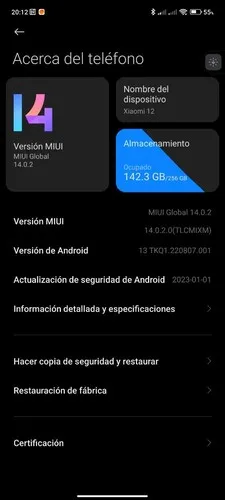
Despite Xiaomi’s official presentation of MIUI 14 in December, the OS update has not yet been widely released. At the time, Xiaomi stated that the OS update would be made available for the Xiaomi 12 series starting in January 2023, and it followed through with the Xiaomi 12 Lite. The Xiaomi 12 has now been added to the short list of devices that can download MIUI 14 in one way or another. Before February is up, the Xiaomi 12 Pro, MIX Fold 2, Xiaomi 12S series, and Redmi K50 series are all scheduled to receive MIUI 14.
Currently, Xiaomi has only made MIUI 14 available to Xiaomi 12 devices that have been accepted into the Mi Pilot Program. The build number suggests that Xiaomi issued MIUI 14 as MIUI 14.0.2.0 to the Xiaomi 12 at this early stage of the OS’s lifecycle, according to The Update Box. For perspective, the update is 4.45 GB in size and comes with the January 2023 set of Android security updates. Before switching from MIUI 13 to MIUI 14, Xiaomi advises users to create a complete backup. The following is the URL to download MIUI 14.0.2.0:
Unless Xiaomi finds any significant flaws, Mi Pilot Program builds typically take a few weeks before they are released to a larger audience. Even though MIUI 14 is a hefty download, once loaded, the OS should use less storage space than MIUI 13 did. In addition, MIUI 14 offers more system program uninstall options than MIUI 13 provides, which when combined with an automatic duplicate file finder can help users use built-in storage more efficiently. It is claimed that MIUI 14 consumes up to 22% less power than MIUI 13 while loading apps up to 60% faster. However, it is unknown whether all the advancements featured in the Chinese version of MIUI 14 will be included in the international release.
Many of us have wanted the customization layers to merge with Android 12 since it was announced and the new mechanism for customizing mobiles with that version was released. The first to add it to One UI 4 in its own unique way was Samsung, and the next to do so will be Xiaomi, according to a leak shared on Twitter by user Mishaal Rahman.
This has discovered within the Android internal code that the so-called Monet themes, which are hallmark of the purest version of Android, will also be in the Chinese manufacturer’s popular layer.
A very important change, which gives more personality to Xiaomi brand mobiles, which with the themes already gave us a thousand and one possible style configurations. The colors are based on the wallpaper, but we can also choose our favorite combination of tones.
The color arrives at Xiaomi
Because of the photographs supplied by Xiaomi ui, we currently know how they operate and how they will behave on the Xiaomi’s smartphones, but it shouldn’t be long before we see additional circumstances where the adaptive colors of Android 12 reach Xiaomi smartphones. The feature is included in MIUI 13 version 22.1.17, which is currently only available in China.
This option will be available to everyone in the future, albeit we will have to wait because it will not be included in the first global editions of MIUI 13. The program will be released later, allowing us to customize the appearance of our Android phone as if it were a Google Pixel.
The images show how the new Android 12 widgets, as well as Google Chrome tabs and even system components, adapt to the selected hue. All Google applications are expected to accept this shift, and we will gradually learn how other areas of the Xiaomi, Redmi, and Poco terminals will follow suit.
For the time being, devices running Android 12 in its stock form can apply Monet themes to the icons and control panel, which is not possible with MIUI 13. However, we do not give up hope that they will arrive following this first application.
What will happen to the themes?
Until now, the best way to change the look of our Xiaomi device was to use MIUI’s themes app. We may find many other style combinations there, which we can customize to our liking on the smartphone by changing the icons, colors, and shapes. The incorporation of this new Android function raises a lot of questions about what will happen with this benefit.
In recent months, the app has stopped integrating as many options in Europe, and some notable themes have been left alone in China.
This could be the first step for Xiaomi to become more pure, at least for Spain and other countries, where stock Android is preferred and other systems that are visually much more complex are less popular.