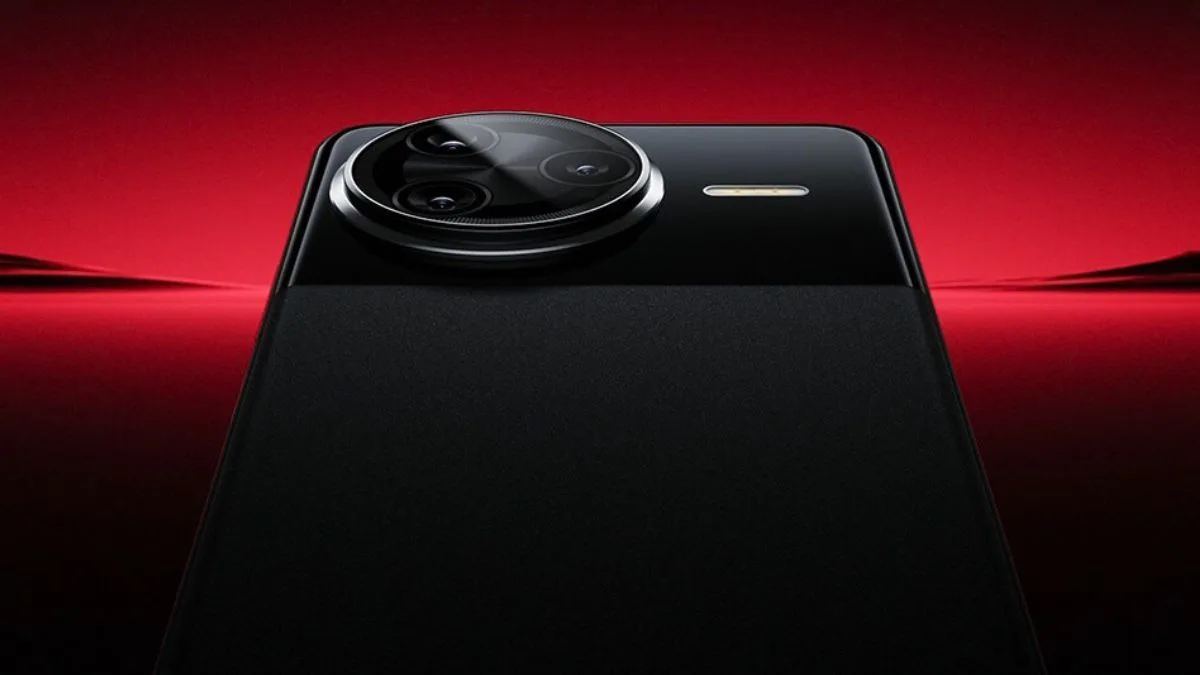
According to reports, the Honor Magic V6 foldable has earned a 3C certification and disclosed a few key features. The most recent listing clarifies if the forthcoming flagship smartphone will actually have the biggest battery to date or whether this is simply a rumor.
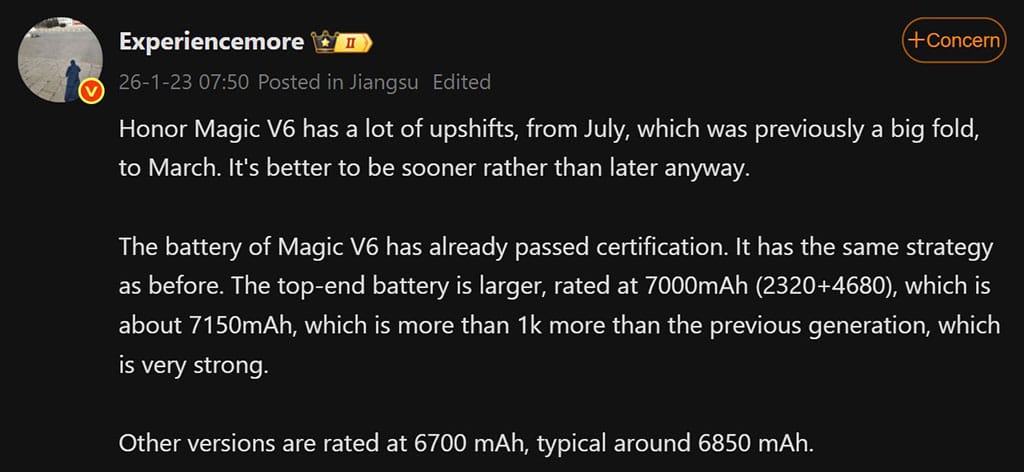
ExperienceThe Honor Magic V6 has many upshifts (new changes) this time, according to more Weibo tipsters. from a large folding mechanism to a number of recognizable features.
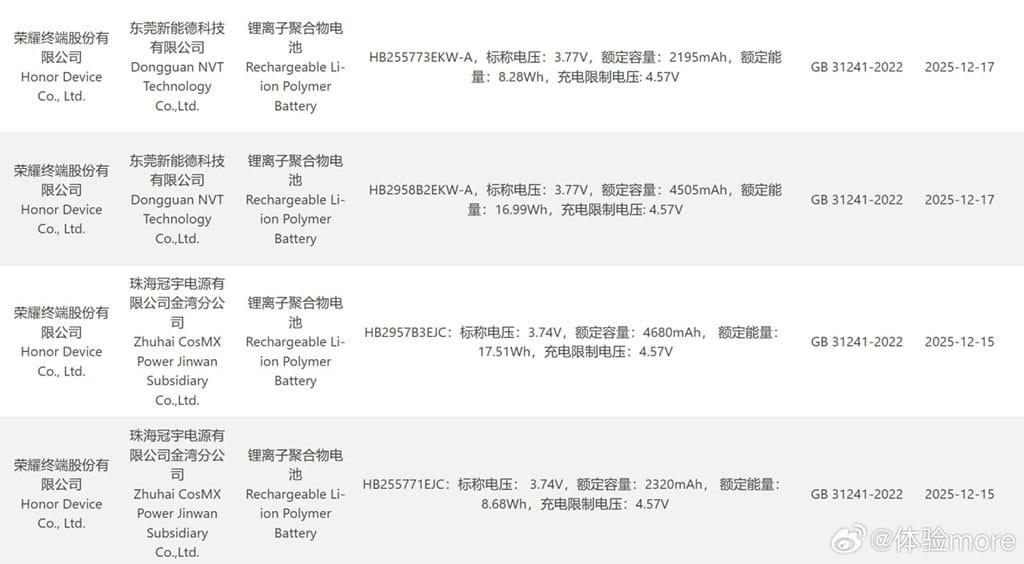
The informant added that the Honor Magic V6 passed the 3C certification. He posted two pictures that showed the device’s battery specifications.
Honor Magic V6 passed the 3C certification
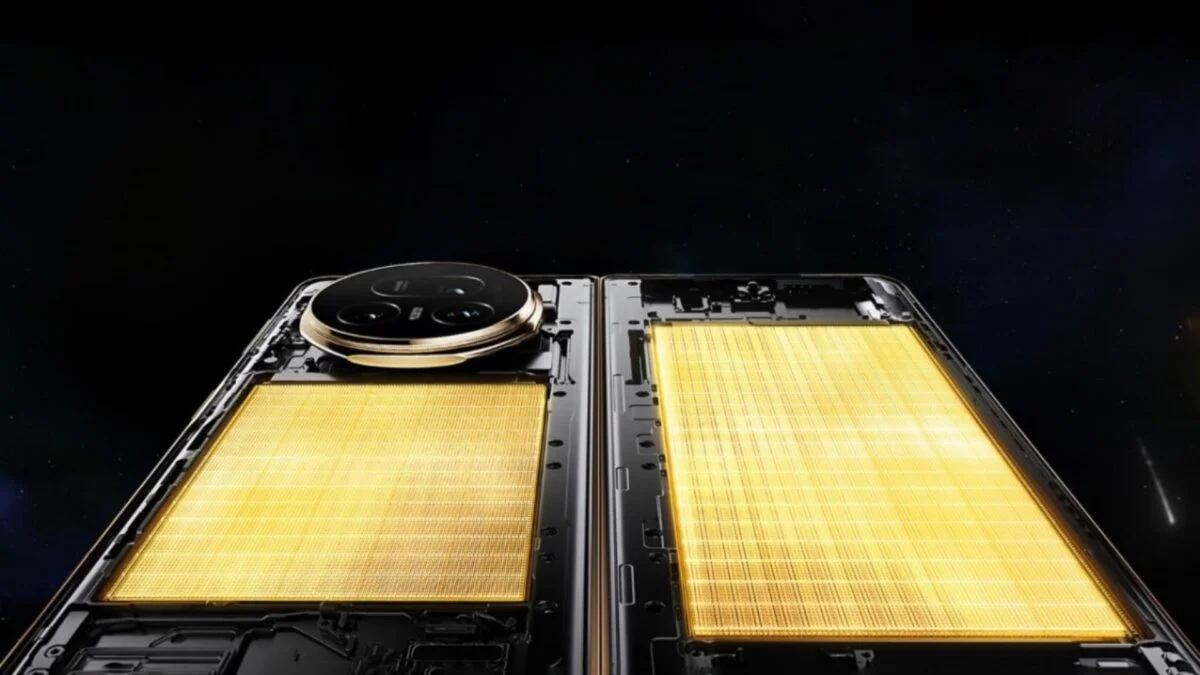
Honor intends to seed a premium battery pack in the highest storage variant based on the 3C data. It has two batteries—2320mAh and 4680mAh—and a rating of about 7000mAh, with an average value of 7150mAh.
This deal appears to be fairly strong and is almost $1,000 more than the Magic V5 model from the previous generation. Other storage models will probably include a 6700mAh battery pack, with a typical value of 6850mAh, according to the tipster.
The Magic V6, which has the biggest battery capacity to date, is expected to launch as a formidable competitor in the foldable market, according to early leaks. This is further supported by the current listing. For this gadget, Honor might also employ innovative battery technology.
And here’s some positive news! Honor has revealed that the ROBOT PHONE and the Magic V6 foldable will make their worldwide debut at the MWC 2026 event.
Along with the gadgets’ primary features and important specifications, the business will provide an official look at them. It will also reveal information about its next AI-powered innovations and other plans to promote sustainable growth.
Earlier in October, Honor unveiled its flagship Magic8 series of smartphones, which includes the Magic8 and Magic8 Pro. According to reports, it now intends to expand the roster with another gadget. The phone was supposedly going to be released under the name Honor Magic8 Mini. It is possible, nevertheless, that the business will launch the gadget as the Magic 8 Air. A tipster has supplied an allegedly leaked photograph of the Honor Magic 8 Air (or Magic8 Air), which has revealed its potential design, even though there hasn’t been an official announcement yet.
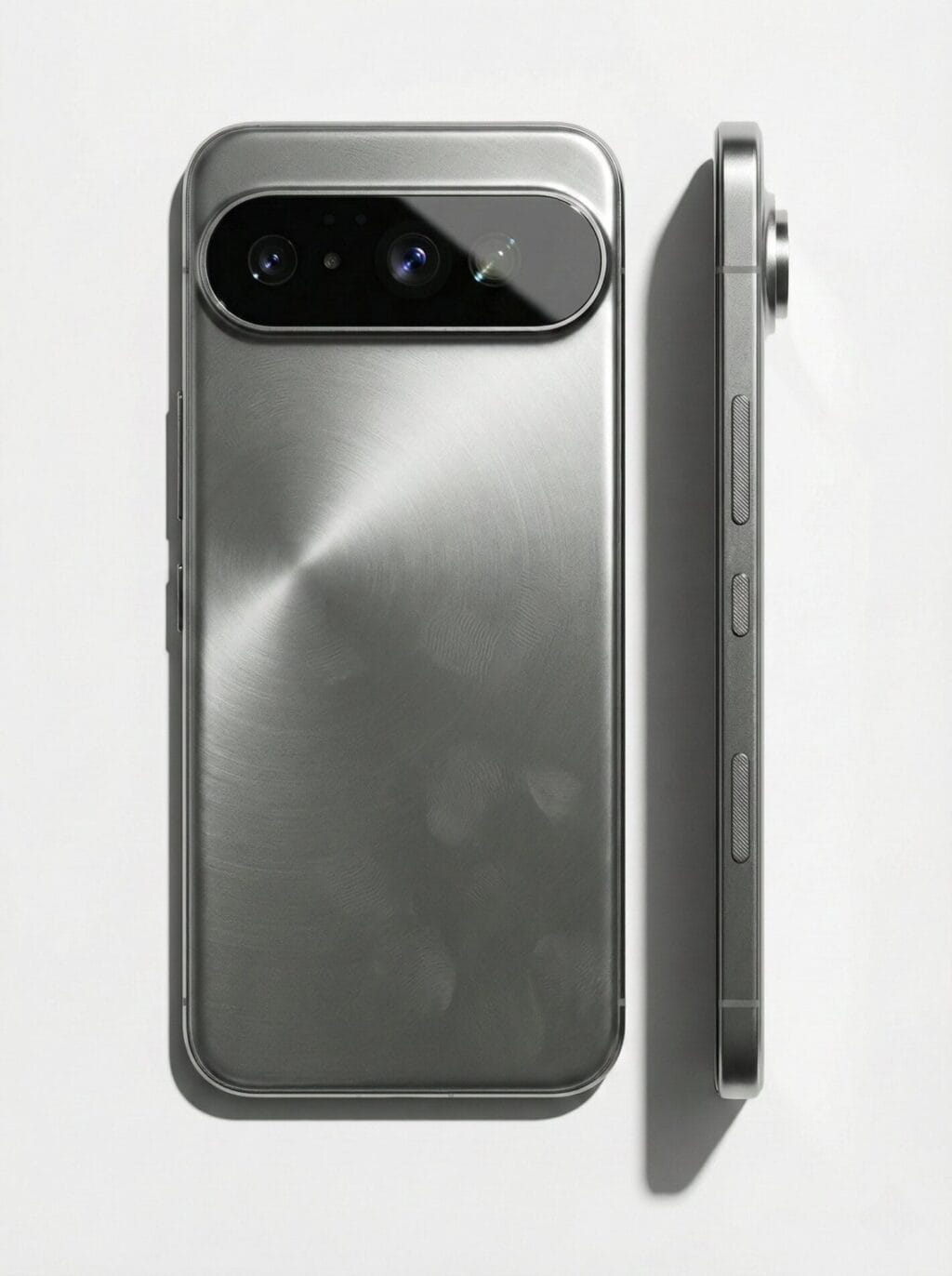
Honor Magic 8 Air design surfaces in fresh leak images
The Honor Magic 8 Air will have a sizable horizontal camera island if the leaked image is accurate. It resembles the Google Pixel 10 series in terms of design. According to the leaked images, it will have a brushed aluminum rear. It’s important to note that this picture is only a render, therefore the real Honor Magic 8 Air can have a different design.
Along with the power key and volume rocker, the device will also have a third physical button on the right side, according to the leaked render. Similar to the key on the previous Magic 8 series devices, there can be a specific key to activate the AI assistant.
Thicker, but lighter than the iPhone Air and Galaxy S25 Edge
In addition to the design, the source disclosed information about the weight and thickness of the Honor Magic 8 Air. The Magic 8 Air will have a waist circumference of 6.3mm, according to the tipster. In actuality, it will be thicker than the Galaxy S25 Edge (5.8mm) and iPhone Air (5.6mm). The phone will, however, be lighter than its competitors. Compared to the 165 grams of the iPhone Air and the 162 grams of the Galaxy S25 Edge, it will only weigh 158 grams.
Li Kun, the product manager of Honor, has also posted a picture that compares the Magic 8 Air to the iPhone Air on a scale. It demonstrates the Magic 8 Air’s superior weight over the iPhone Air.
According to reports, it would have a 6.31-inch screen. The MediaTek Dimensity 9500 processor might be used to power it. A massive 5,500mAh battery with 80W fast charging, an ultrasonic fingerprint sensor, a 200MP primary camera, and a 50MP telephoto lens are possible further highlights.
Magic 8 Air is anticipated to be released by Honor in the first quarter of 2026. Additionally, it will compete with the Galaxy S26 Edge, which is also anticipated to launch at the same time.
The Redmi K90 Ultra, which will probably arrive in China in a few months, is already being discussed in the rumor mill after Redmi unveiled the K90 and K90 Pro Max in October. Digital Chat Station‘s early information suggests significant improvements over the current models, providing a first glimpse of Xiaomi’s potential lineup expansion. The information provides a first look, and as launch draws near, more clarity is probably in store.
Redmi K90 Ultra key specs
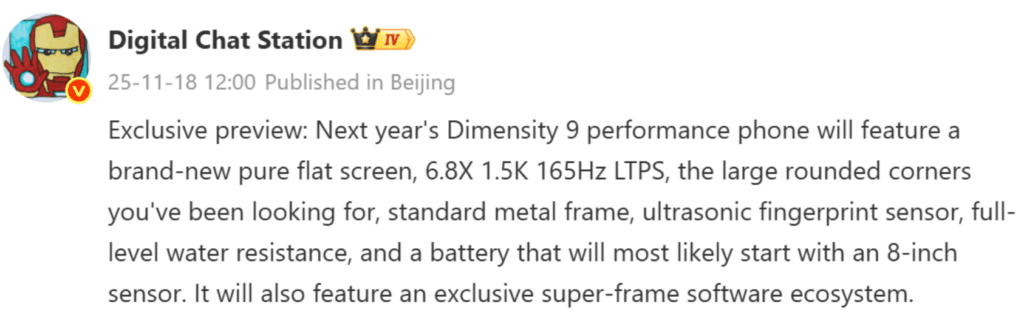
The Redmi K90 Ultra is anticipated to include a 6.8-inch LTPS OLED display with a 1.5K resolution and a quick refresh rate of 165 Hz, according to the leak. The device may include a metal central frame for increased durability, and the screen is rumored to feature rounded corners.
Strong water protection is also anticipated, which is consistent with the stronger resistance ratings of more recent high-end models. An improved audio system and an ultrasonic in-display fingerprint scanner are two more anticipated enhancements.
Battery capacity appears to be one of the most notable features. According to rumors, the phone would have a battery of about 8,000 mAh, which is a significant improvement over the K90 Pro Max and earlier Ultra models. Additionally, a specialized high frame rate software layer that could improve the overall performance profile—particularly for gaming—is hinted at by the tipster.
According to reports, the MediaTek Dimensity 9 series chipset powers the Redmi K90 Ultra. This might be the Dimensity 9500 Plus, which is expected to be released in 2026. The leak characterizes the Ultra as a performance-focused model, implying that photography may continue to be at a respectable but not flagship-leading level, even though camera details have not been disclosed.
The K80 Ultra’s June 2025 release cycle is anticipated to be followed by the K90 Ultra. The K90 Ultra might make its Chinese debut around the middle of 2026 if Xiaomi sticks to this schedule. It’s possible that a modified K90 Ultra may go on sale as a Xiaomi flagship worldwide.
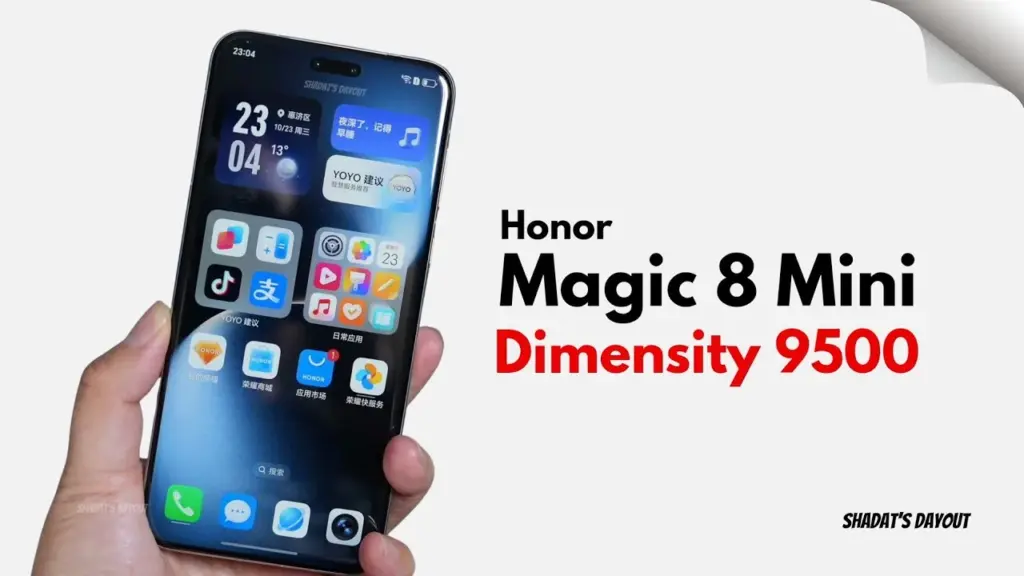
Honor might be gearing up to revive something Android fans haven’t seen in a long time: a genuinely compact flagship, Magic 8 Mini, that isn’t a watered-down version of the “real” model. A fresh leak suggests the company is working on what’s reportedly called the Magic 8 Mini, and if the details hold up, it could end up being one of the thinnest and lightest compact phones of the year.
Only in October did the standard Magic 8 and Magic 8 Pro arrive, extending Honor’s dominance in the high-end market. However, rumors about a smaller “Mini” variant began to circulate almost immediately. A pre-production unit is already making the rounds, according to Weibo tipster Digital Chat Station. It is remarkably tiny, measuring between 5 and 6 mm. That would clearly place it in the “ultra-thin” category among gadgets like Apple’s iPhone Air and Samsung’s Galaxy S25 Edge. However, the combination—not just slim, but truly compact—is what sets this one apart. It is a combination of two trends that hardly ever coincide these days.
Honor Magic 8 Mini specs
The Magic 8 Mini is rumored to have a 6.31-inch display up front, which is essentially the new benchmark for phones labeled as small.
The camera situation is still unclear. Honor is apparently testing a 200MP primary sensor, but a 50MP 1/1.5 sensor is being discussed. The speculated telephoto lens is the more intriguing aspect. Since very few phones smaller than 6.5 inches have significant zoom capabilities (the 6.32-inch OnePlus 13T, for example, only has a modest 1/2.75″, 2x telephoto), if Honor does incorporate one here, it will probably employ a smaller sensor but still give the Mini an advantage in terms of adaptability.
The Dimensity 9500 chip from MediaTek, which powers Vivo’s X300 and X300 Pro, is anticipated to power the phone. Battery life is the only possible issue. There are rumors of a 5,500mAh cell, which is amazing considering the form factor but not nearly as big as the 6,260mAh pack of the 8.2mm-thick OnePlus 13T.
Honor hasn’t made any announcements yet, and it’s unclear if the Magic 8 Mini will share the stage or stay under wraps for a little while longer given that the Honor 500 series will debut in China on November 24. Nevertheless, this might be one of Honor’s more innovative phones if the reports turn out to be true. An “ultra-thin small-screen” gadget could be just what some of us have been waiting for in a market where flagship devices seem to be getting bigger and heavier.
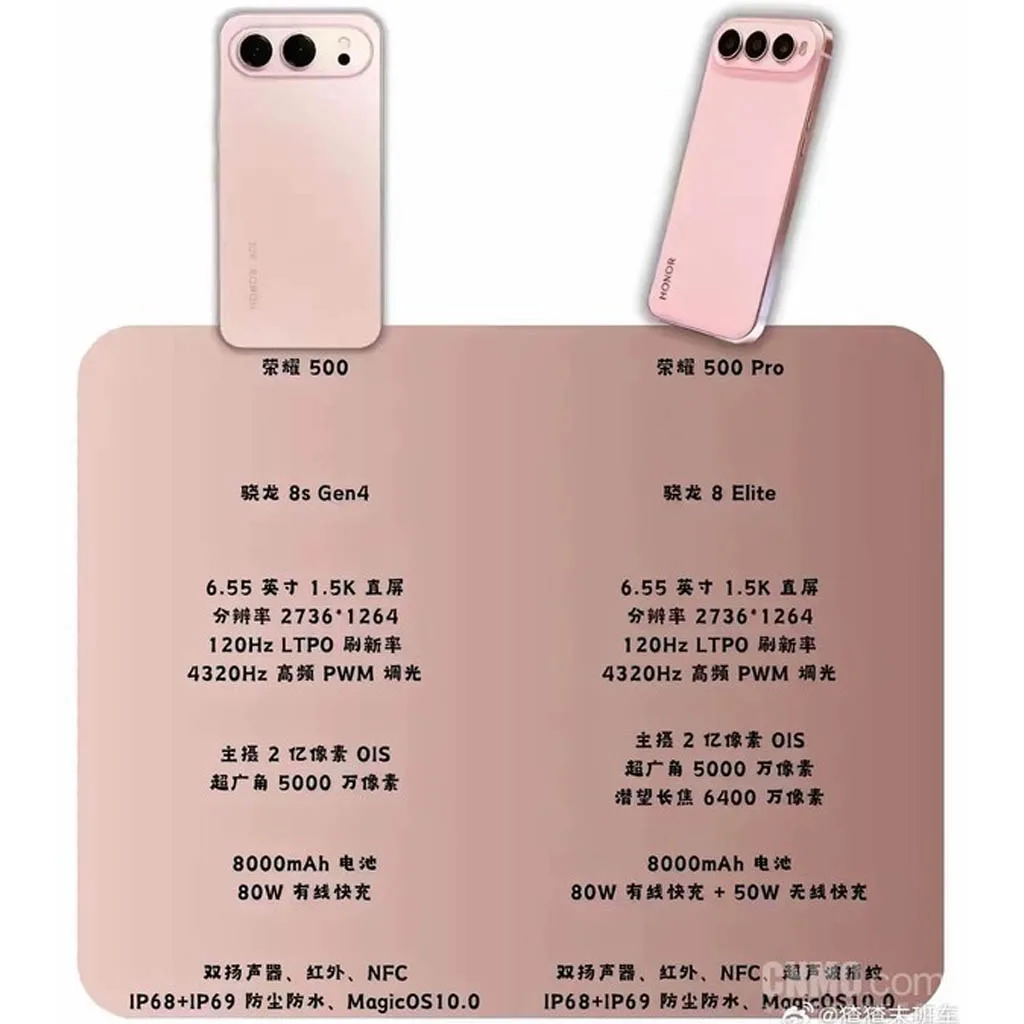
The majority of the important features of the Honor 500 series have been made public by numerous leaks and rumors, but the most recent unofficial specs sheet provides additional insight into the future handsets. The startling details of the new-generation digital lineup are also hinted at.
The new document provides further information about the display panel, chipset, and battery metrics, even if we already know most of the specifications of the Honor 500 series.
First of all, it notes that the Snapdragon 8 Elite chip rather than the Gen 5 version may be installed in the Honor 500 Pro. Conversely, the Snapdragon 8s Gen 4 SoC will be used in the regular model. The two chips’ core configurations are shown below.
Snapdragon 8s Gen 4: 1 core x Cortex-X4 + 7 cores x Cortex-A720
Snapdragon 8 Elite: 2 cores x Oryon (Phoenix L) + 6 cores x Oryon (Phoenix M)
Regarding the display, a 6.55-inch LTPO OLED flat screen with a resolution of 2736 x 1264 pixels and a refresh rate of 120 Hz is anticipated for both Honor 500 versions. It might also enable high-frequency PWM dimming at 4320 Hz.
The Honor 500 vanilla model is probably going to have two cameras: a 200MP primary camera and a 50MP ultrawide-angle lens. Three imaging sensors—a 200MP primary, a 50MP ultrawide-angle, and a 64MP periscope lens—will be included in the Pro One.
An 8000mAh battery with 80W wired fast charging may be compatible with both devices. The Pro model may have 50W wireless charging capability, which the regular Honor 500 may not have.
Dual speakers, infrared, NFC, IP68+IP69 dust and water resistant ratings, and the Android 16-based MagicOS 10.0 operating system are possible additional features of the Honor 500 series.
The Honor 500 series is expected to make its debut in December or before the end of current month. The debut date has not yet been disclosed by the corporation. However, we might soon get into specifics on this topic. Keep an eye out.
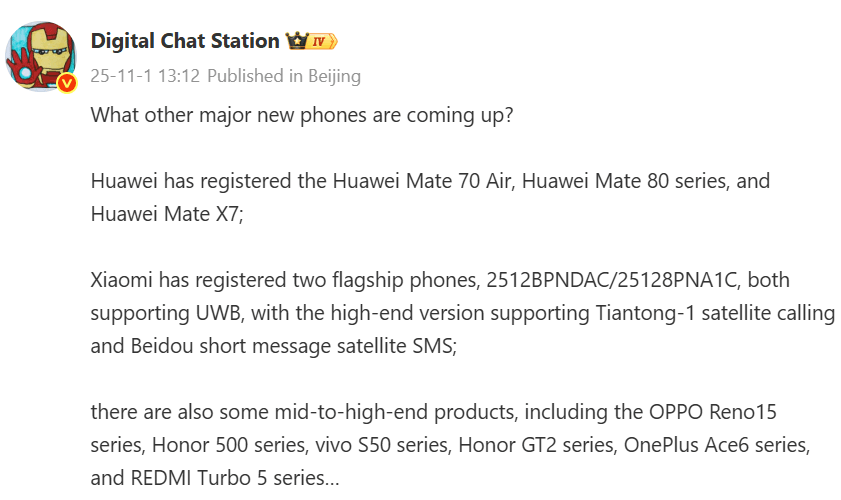
According to reports, Xiaomi is preparing to release the Xiaomi 17 Ultra. Tipster Digital Chat Station has listed every phone that has just received certification in China and is anticipated to go on sale there in a recent Weibo post. These include the Xiaomi 17 Ultra, the Oppo Reno 15 series, the Honor 500 series, the Vivo S0 range, the OnePlus Ace 6 series (probably under the Turbo name), the Redmi Turbo 5 series, and the Huawei Mate 70 Air, Mate 80 series, and Mate X7, which are anticipated to arrive this month in China. He has specifically stated that there would be two variants of the 17 Ultra.
DCS reports that Xiaomi has filed two variants of the gadget with model numbers 2512BPNDAC and 25128PNA1C on Chinese certification platforms. While the more expensive model will have Beidou short message communication and Tiantong satellite calling, both Xiaomi 17 Ultra models will support UWB (Ultra-Wideband).
The latter will provide a dependable lifeline for calls and text transmission in harsh environments like deserts or offshore sites, enabling customers to stay connected even in remote areas without terrestrial networks.
Xiaomi 17 Ultra rumoured specs
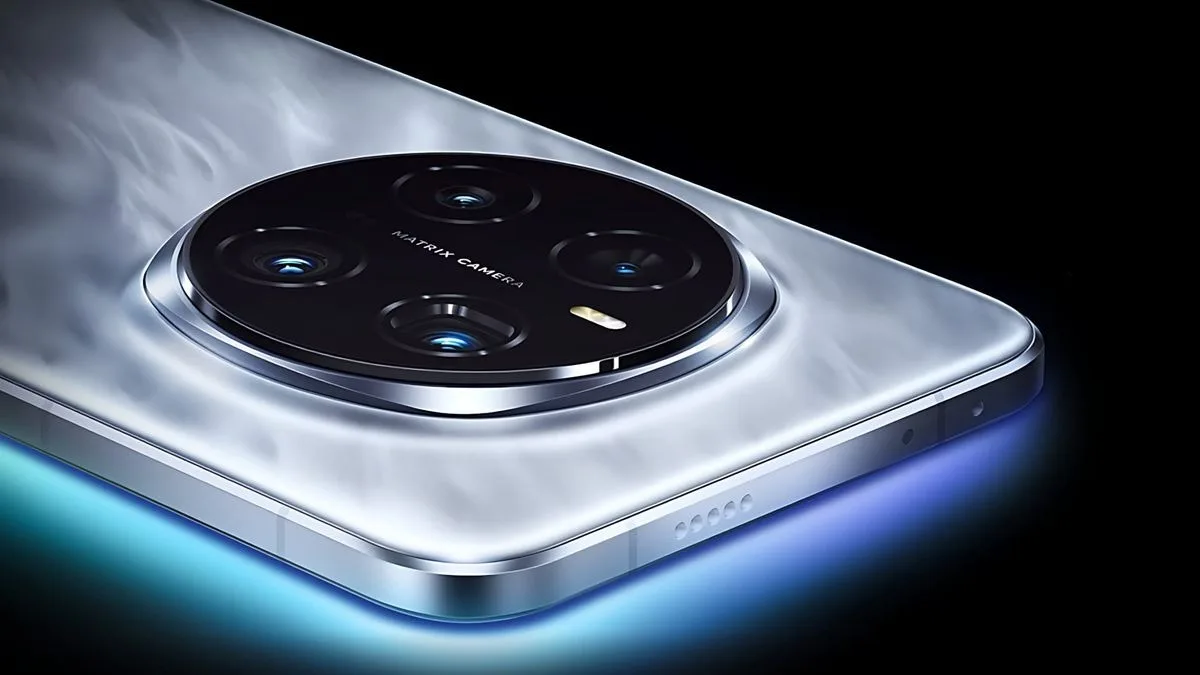
According to additional sources, the Xiaomi 17 Ultra is anticipated to include a flat 6.8-inch OLED display with 2K resolution and a refresh rate of 120 Hz, along with a sizable circular rear camera module. It will have a high-capacity Xiaomi Jinsha River battery, IP68-grade waterproofing, wireless charging, and Qualcomm’s Snapdragon 8 Elite Gen 5 CPU under the hood.
DCS also disclosed that the camera configuration of the Xiaomi 17 Ultra will be a key feature. It will have a 200-megapixel periscope telephoto lens with variable focal lengths and macro shooting capabilities in addition to a 50-megapixel primary sensor with an updated big sensor and in-sensor zoom technology. It is claimed that the lenses improve clarity and dynamic range in all types of illumination.
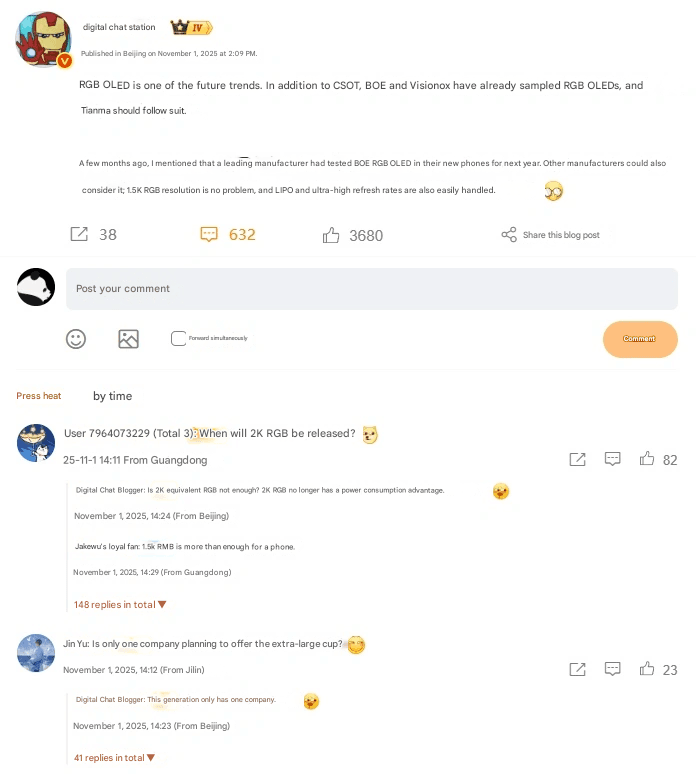
Also, Xiaomi is setting the standard for mobile display technology in the future. “RGB is clearly the trend of the display,” Redmi Product Manager Sun Cun stated in an official statement, citing IT Home. This happened in reaction to well-known leaker @DigitalChatStation, who claimed that major panel makers like CSOT, BOE, and Visionox were developing RGB OLED displays and that Tianma would shortly follow.
Compared to other OLED displays, RGB OLED offers crisper visuals, more accurate colors, and reduced power usage by displaying subpixels in the hues red, green, and blue. According to DigitalChatStation, a number of companies have begun **sampling 1.5K RGB OLED panels that can handle LIPO backplanes and high refresh rates, with 2025 smartphones being the target goods.
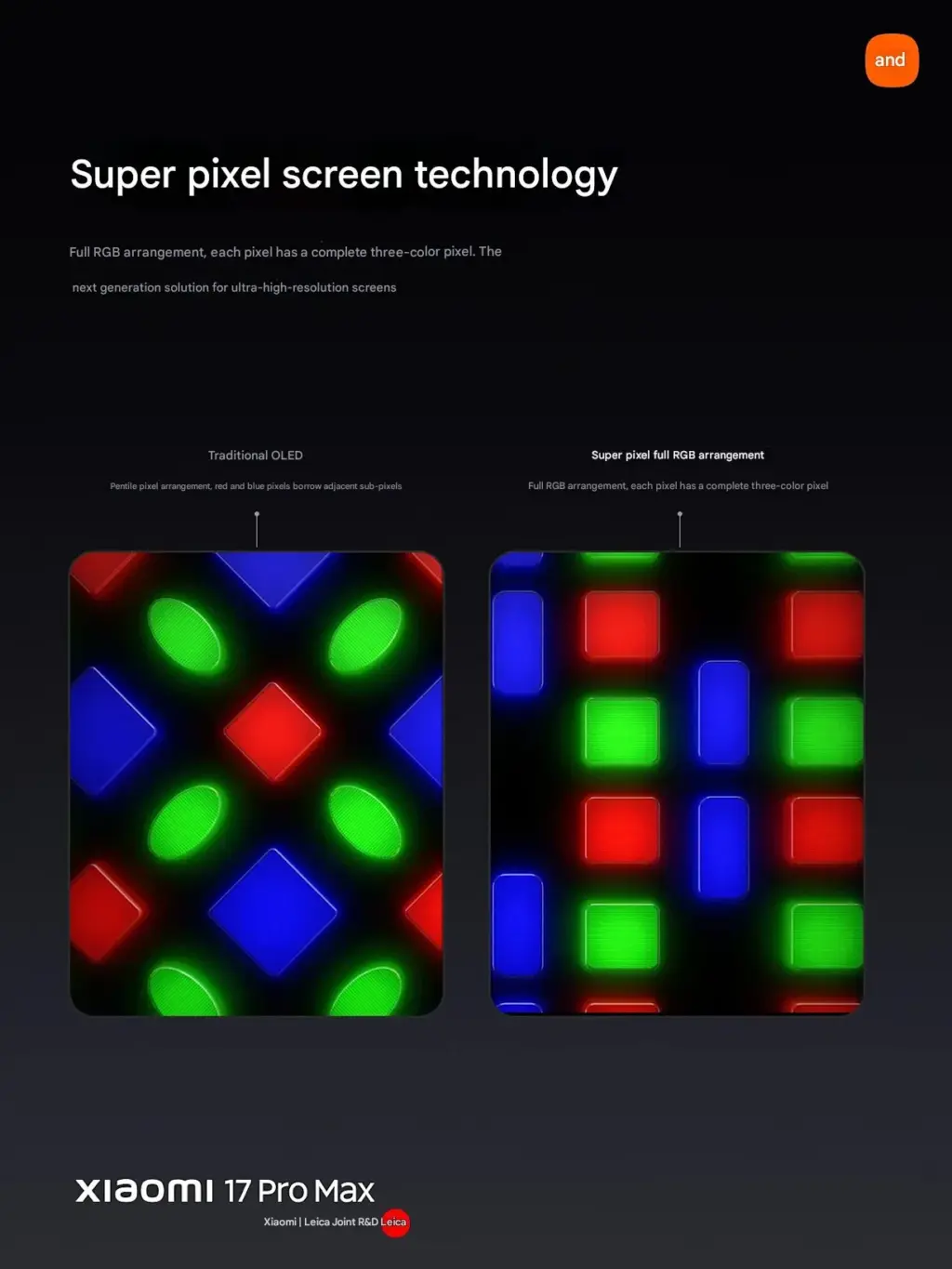
RGB OLED technology
Leading the way in this progression will be Xiaomi’s upcoming Xiaomi 17 Pro and Xiaomi 17 Pro Max. TCL CSOT display panels, such as the Pro Max with a Real RGB panel using Super Pixel Alignment technology, are included with these devices. In addition to providing crisper visuals than 2K resolution, this enhancement reduces energy usage by 26%, which is ideal for flagships.
Lei Jun, CEO of Xiaomi, also highlighted “unparalleled screen clarity and battery savings” when discussing another innovation made possible by the Xiaomi 17 Pro Max, which uses Super Pixel display technology.
With Sun Cun’s confirmation, there is now concrete proof that Xiaomi’s Redmi and Xiaomi brands will soon have flagship models with RGB OLED screens in a number of product lines and series, including the Xiaomi Pad series, Xiaomi 17 series, and upcoming Redmi K Ultra models. This is undoubtedly a significant step toward more **accurate, energy-efficient, and long-lasting display offerings.
If you were a fan of Nothing, you would know that the release of the Nothing Phone (3a) Lite wasn’t news, yet it was. On the one hand, you are ready for the surprises these gadgets deliver. Conversely, the Nothing Phone (3a) Lite is unique. The brand’s sole entry-level phone will go on sale in October.
You adore phones with translucent designs and glowing glyph lights, and the Nothing Phone series perfectly captures that feel. This phone is unique! Prepare for the Nothing Phone (3a) Lite, the most daring low-cost option to yet. We will discuss the launch, the cost, what to anticipate, and everything in between.
Nothing Phone (3a) Lite announced
Nothing recently revealed that the Phone (3a) Lite would go on sale worldwide on October 29, 2025. That is 1:00 pm GMT, or 6:30 pm IST if you’re in India. YouTube and Nothing’s website both provide live streaming of the event. The launch schedule as a whole aligns perfectly with the Phone 3 lineup. It comes after the March 2025 Nothing Phone (3a).
It’s their first real entry-level phone. It is also intended to be less expensive than their CMF lineup. This launch calls out to you if you prefer daring over basic. With its useful pro features, this phone might be your next reasonably priced upgrade. We now go on to the following part.
Features and design
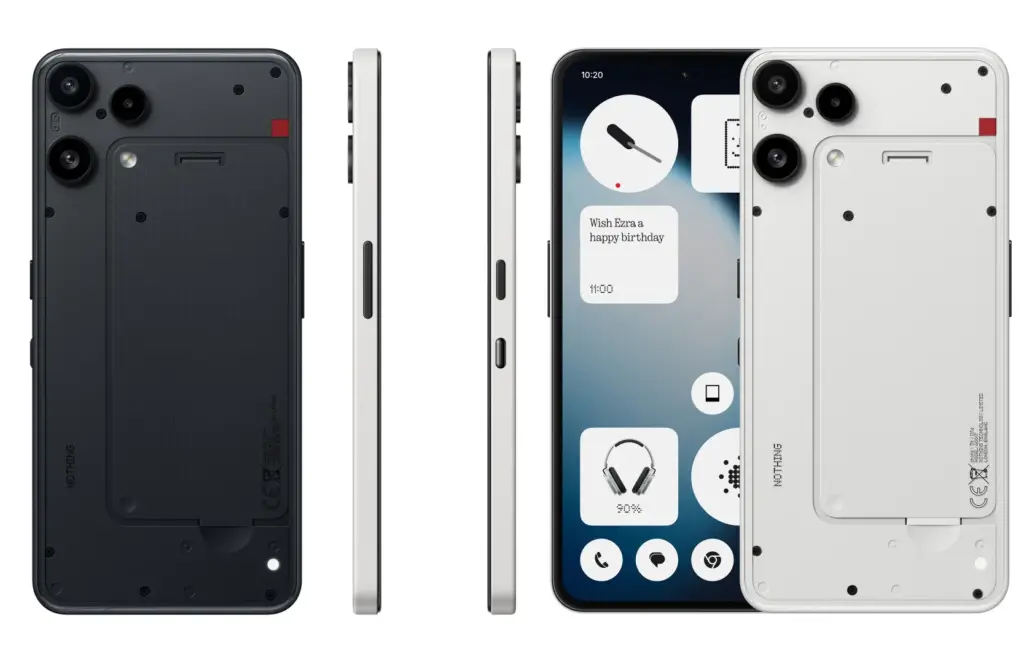
Nothing perfectly captures the eccentric style, yet it doesn’t even appear strange. The Nothing Phone (3a) Lite, which comes in black and white, has a sleek design. A rear LED flashlight is shown in teasers. It also serves as a ping for notifications. However, it now appears lot simpler. This is not a full light show. It lights just enough to draw attention, though.
It comes pre-installed with Android 15. Nothing about OS remains tidy. Widgets look stunning. The gestures are fluid. You get that feeling of transparency without the clutter.
We are aware that the Nothing Phone (3a) Lite will have a 6.77-inch full-HD+ AMOLED screen before it is released. All flagship and respectable 30k-range phones on the market have it at 120 Hz. There are 1.07 billion shades of color. ideal for playing games, watching movies, and other media.
Budget phones typically use the MediaTek Dimensity 7300 processor. Another item on the list is the Nothing Phone 3a Lite. This phone’s apps seamlessly multitask because to its 8GB RAM. 128GB of storage. Extend if necessary.
Regarding the battery, it happily keeps the large 5000mAh cell that lasts all day. At 33W wired, charging is quick. 5W reverse charging. It’s sufficient to sustain earbuds.
One of Nothing Phones’ best features is its cameras, which are not being downsized either. We have an 8-megapixel ultrawide, a 50-megapixel telephoto for zoom, and a 50-megapixel primary camera on the back. An incredible 16-megapixel selfie lens is located on the front. Rear camera daylight photos are particularly striking. The performance in low light is the sole drawback. It’s good, but not at the pro level.
Nothing Phone (3a) Lite price
As far as we are aware, this version was released to compete with more reasonably priced phones. With the lite edition, nothing keeps entry-level real. At the very least, we should anticipate a 5–6k price reduction from the original model. With 8GB RAM and 128GB storage, the Phone (3a) Lite is priced at Rs. 17,990. A great deal for fans of Glyph. Sales begin shortly after introduction, most likely on the website of Nothing or Flipkart.
How does it compare, though? This is a brief table of competitors priced between Rs. 15,000 and Rs. 20,000. The software, features, and performance of these packs are comparable.
Phone Model
Price (Rs.)
Key Highlights
Nothing Phone (3a) Lite
17,990
Dimensity 7300, Glyph LED, 120Hz AMOLED
Moto G85 5G
17,999
Snapdragon 6s Gen3, 50MP OIS cam, 5500mAh
Realme Narzo 70 Pro
18,999
Dimensity 7050, 50MP main, 67W charge
Samsung Galaxy A16 5G
18,499
Exynos 1330, 50MP triple cam, 5000mAh
Poco X6 5G
19,999
Snapdragon 7s Gen2, 64MP OIS, 5100mAh
Nothing Phone (3a) Lite vs Nothing Phone (3a)
We are tempted by the Lite because it is reasonably priced. However, if you can afford to spend a little extra, the complete Phone (3a) entices you more. Since the 3a isn’t too old, the most recent software upgrades are comparable to those of the light. The price is Rs. 22,500. This table may help you make a decision if you are unsure about how the Lite version differs from 3a. Let’s do a table comparison.
Feature
Nothing Phone (3a) Lite
Nothing Phone (3a)
Price (Rs.)
17,990
22,500
Processor
Dimensity 7300
Snapdragon 7s Gen3
Display
6.77″ FHD+ AMOLED, 120Hz, 1.07B colors
6.7″ FHD+ AMOLED, 120Hz, 1B colors
Rear Camera
50MP + 50MP tele + 8MP UW (no OIS)
50MP OIS + 50MP tele + 8MP UW
Front Camera
16MP
32MP
Battery & Charging
5000mAh, 33W wired, 5W reverse
5000mAh, 50W wired, 7.5W reverse
In terms of speed and shots, the 3a prevails. In games, Snapdragon outperforms Dimensity. OIS stabilizes videos. 32-megapixel selfies are crisper. At 50W, charging is incredibly quick. In twenty minutes, that will be half full.
But Lite is resilient. identical battery life. The screen pop is similar. Hold on to Lite if the budget is tight and you can do without a few slightly less expensive features. Eighty percent of the magic is delivered by it. Only if you are using a previous series should you upgrade after the Nothing Phone (3a) Lite launch.
The Nothing Phone (3a) Lite demonstrates a bold look that isn’t appropriate for everyone. However, many people can afford it. This phone is especially suitable for young people who are in college, are students, or are starting their first job. Additionally, the Nothing phone 3a lite can be your calling if you swap phones every two to three years in search of the newest features.
How do you feel about the release of the Nothing Phone (3a) Lite? Would you purchase it? Leave a comment with your ideas!
The OnePlus 15 will be released later this month, according to OnePlus, with a Chinese release date coming before the worldwide launch. In addition, the device’s three new hues are being shown.
According to OnePlus’ Weibo tweets, the OnePlus 15 will debut in China on October 27. The OnePlus Ace 6, which looks to be a more affordable “flagship” in the same ballpark as the OnePlus 13R, will make its debut with the gadget. In contrast, the OnePlus 15 would be a “Ultra Performance” gadget with a 165 Hz screen.
The Chinese launch of the OnePlus 15 precedes the anticipated early worldwide release date based on the current plan.
Additionally, OnePlus has unveiled the three new color options for the OnePlus 15, with “Misty Purple” being the most notable. According to the Chinese post‘s translation, the other two are “Original Sand Dune” and “Absolute Black.”
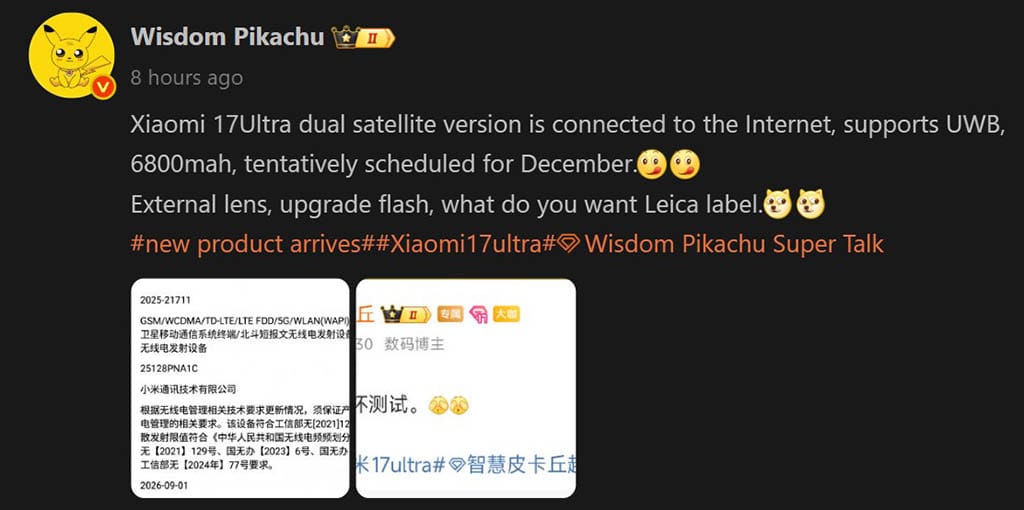
The business is getting ready to add another high-end model to its lineup following the release of the Xiaomi 17 variants. According to input, the Xiaomi 17 Ultra, which will soon be available to consumers, will have a 6800mAh battery and new satellite features.
Xiaomi appears to be attempting to compete with Honor in the smartphone battery market. At the moment, the only phone manufacturer with cell packs larger than 6500mAh is Magic. Maybe Xiaomi will soon follow suit.
According to Weibo tipster @SmartPikachu, the Xiaomi 17 Ultra with a large battery pack might make its appearance by the end of this year. This is essentially the Xiaomi 17 Ultra’s dual-satellite variant, which just received network certification.
Xiaomi 17 Ultra Satellite Edition teased
This gadget, which has the model number 25128PNA1C, is qualified by China’s Radio Certification database. It is the satellite version that supports Beidou and Tiantong-1 connectivity, not the standard version. To put it another way, customers have the option to send and receive satellite messages or make satellite calls.
The certificate’s next requirement is support for Ultra-Wideband, or UWB. It will make it possible for the gadget to continue having smooth connectivity with several devices simultaneously.
Three versions of the Xiaomi 17 Ultra are anticipated to be available: China, Global, and Indian. There will be two versions of the first one: Regular and Dual-Satellite.
In the meantime, Xiaomi might modify the device’s battery and other internal components for the worldwide market. Little is known about the new model at this time. However, we might soon learn additional details about the next “Ultra” phone.
Xiaomi has fully eschewed the 16th generation in favor of launching the new 17 series domestically. It is currently getting ready to launch the flagship portfolio in foreign markets. Let’s wait and watch when this happens.