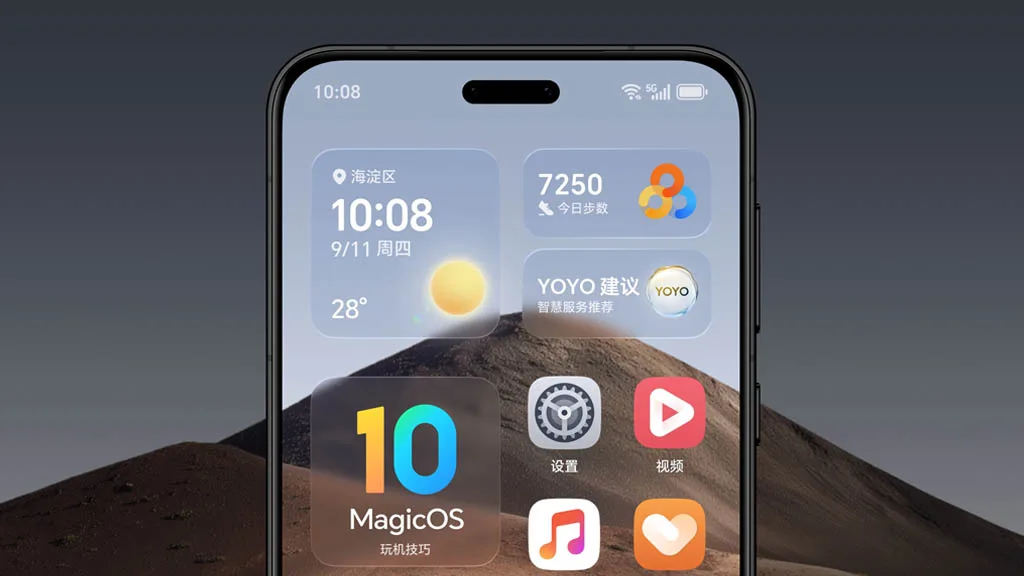
At the company’s first Global Developer Conference in Shenzhen, China, HONOR unveiled its most recent MagicOS 10 version, which is based on Android 16.
The business is integrating its enhanced HONOR AI Connect platform with its new 1x3xN ecosystem technology with the HONOR MagicOS 10.
This new framework will make their AI stack available to partners worldwide (the “1”), assist them with three enablement tasks (the “3”), and scale across various industry clusters (the “N”), such as office and education, wearables and audio, smart homes, toys, and pets.
The new MagicOS represents a “multi-dimensional jump from a conventional OS to a real AI OS,” according to HONOR.
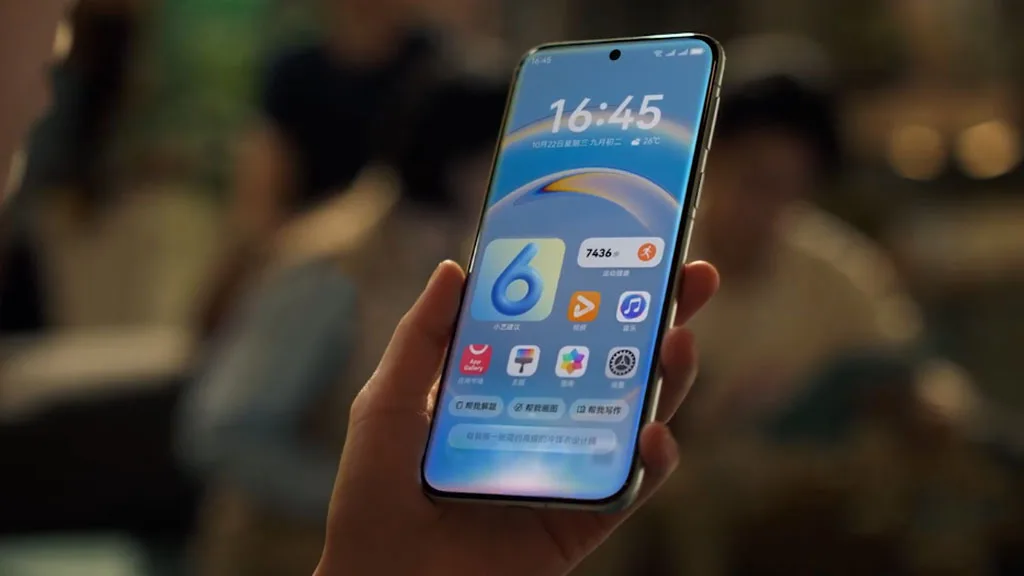
The enhanced YOYO helper, which is driven by MagicLM 3.0 and can now “see, recall, and execute,” is a significant new feature.
With only one swipe, users will be able to ask YOYO to manage routine chores and workflows. Food ordering, shopping, ride-hailing, Magic Color color grading, and sophisticated command-based image editing are some of these casks.
Additionally, it will provide smooth pairing and transfers across HONOR devices, other Android phones, iOS, and Windows.
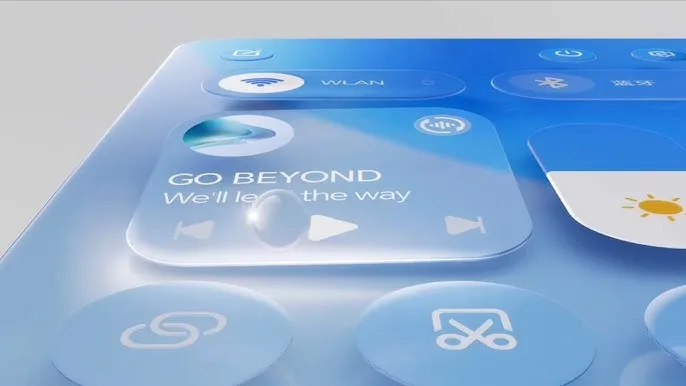
It will also feature a brand-new Zero Gravity Transparency Design. It will have translucent visual effects that strike a compromise between performance and aesthetics, just like the upcoming iOS 26.
These are the new MagicOS update’s primary features. Will your gadget receive it, though? The complete list of devices that qualify is provided below.
With yet another set of improvements, Huawei has released the HarmonyOS 6.0.1 (API 21) Beta Program for its developers. There aren’t much specifics about the latest software version on the description page. It does, however, include some helpful modifications for ArkUI.
It’s true that this program is in beta. The updated developer version has not yet been made available by the corporation. However, it illustrates the enhancements the build will provide to the chosen devices.
The latest Huawei HarmonyOS 6.0.1 (API 21) Beta will improve the ArkUI capabilities, according to the details. It will enhance the SVG parsing for the image section and introduce new attribute styles to C APIs.
Additionally, the release will improve the ArkWeb and Ability Kit components. It will make it possible for background jobs to facilitate the concurrent development of several long-running operations and greatly enhance map services.
A new edition of DevEco Studio with improved AI-assisted programming features is being introduced by Huawei. Developers will soon be able to access the primary 6.0.1 (21) Beta 1.
HarmonyOS 6.0.1 (API 21) Beta Program
The Mate 60 series, Mate 70 series, Pura X, Mate X5, Mate XT, MatePad Pro 13.2 2025, and MatePad Pro 11 2024 are among the devices that qualify for the latest edition. The updated beta version’s description is available below.
Further enhance the capabilities of ArkUI components by adding a batch of C APIs for attribute styles and improving the SVG parsing capabilities of the Image component.
Ability Kit enhances the processing of results when launching an application.
ArkWeb enhances WebView-related capabilities
Background tasks now support the parallel creation of multiple identical long-running tasks.
Map services have further enriched the scenarios in which they can be directly accessed, and so on.
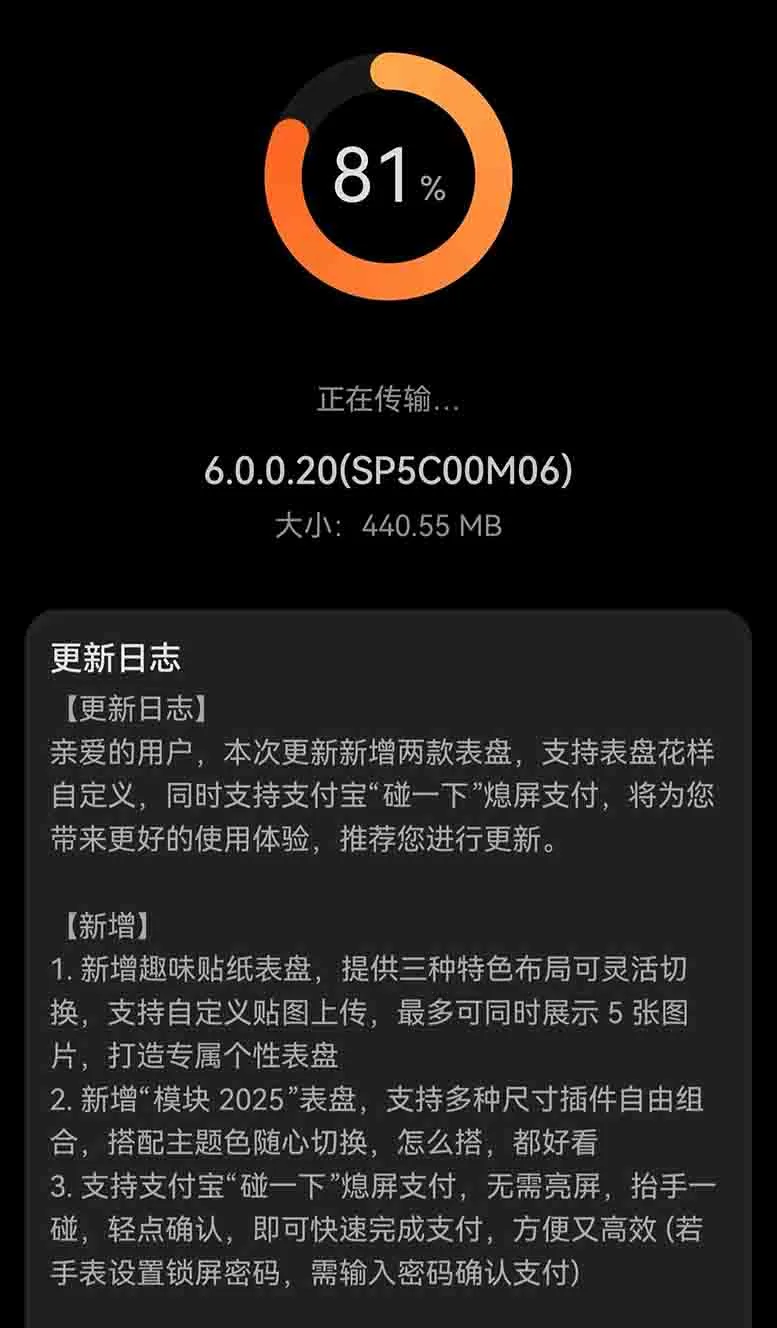
With build version 6.0.0.20, the Huawei Watch GT 5 Pro wristwatch is now receiving a new HarmonyOS 6 update that enables users to tap to pay. The notice states that users who took part in the early testing program are currently receiving this update.
The Huawei Watch GT 5 series, which debuted in September 2024, comes in two models: basic and Pro. Titanium Silver, Obsidian Black, Glacier White, and Ceramic White are just a few of its vivid color choices. It provides a long-lasting backup with a battery life of 14 days.
The most recent HarmonyOS 6 beta update adds a number of new features to the Huawei Watch GT 5 Pro in addition to the tap-to-pay feature. These include the following.
Three distinct layouts that are interchangeable have been added to the fun sticker watch faces. You may create your own distinctive watch face by uploading custom stickers, which can display up to five photos at once.
HarmonyOS 6 beta update
The new “Module 2025” watch face boasts that “it looks excellent no matter how you customize it” and supports a free combination of different-sized widgets and simple theme color switching.
Supports Alipay’s “Tap to Pay” feature, which lets you swiftly finish payments without turning it on by just raising your wrist and pressing the screen. In order to verify the payment, you must input the lock screen password if your watch has one.
You should be aware that this feature upgrade is only available to Chinese users; Huawei has not yet made it available to customers worldwide.
Based on both Android 15 and Android 16, Xiaomi is preparing for the release of HyperOS 3. This will be the final update for many of its older smartphones that receive HyperOS 3, which is based on Android 15. There won’t be any more HyperOS 3.1 updates. In an effort to deploy the newest operating system on a large number of devices, Xiaomi is currently internally testing the HyperOS 3 version based on Android 15 on a few smartphones. This is a significant step in the company’s software development process.
On certain of their smartphones, Xiaomi has already begun testing Hyper OS 3, which is based on Android 15. For some smartphones, this release will be the final significant update, so users should be prepared for some limitations in subsequent updates. The list of devices that are believed to be in the first wave of updates, according to the testing process, first batch include the REDMI Note 13 5G, the POCO F5 Pro, and the Xiaomi 13 Lite, which may be receiving the update to the HyperOS 3 on the Android 15 platform firstly.
Initial Worldwide Rollout of Android 15-based HyperOS 3
The Redmi Note 13 5G is among the first smartphones to get the global upgrade for Android 15-based HyperOS 3, according to data from the Mi community testing logs. The following smartphones will also get the update:
Xiaomi 13 Lite / Civi 2 (EEA – OS3.0.0.1.VLLEUXM)
POCO F5 Pro / Redmi K60 (China – OS3.0.0.4.VMNCNXM | Global – OS3.0.0.1.VMNMIXM)
POCO X6 Neo / Redmi Note 13 5G / Redmi Note 13R Pro (China – OS3.0.0.4.VNQCNXM | Turkey – OS3.0.0.2.VNQTRXM | Global – OS3.0.0.2.VNQMIXM | EEA – OS3.0.0.2.VNQEUXM)
Based on preliminary testing schedules, the Redmi Note 13 5G seems to be the front-runner for the Android 15-based HyperOS 3 Global update. Our list indicates that Xiaomi has yet to begin testing HyperOS 3, which is based on Android 15, on these devices:
Xiaomi 12S
Xiaomi 12S Pro
POCO F5 5G
POCO M6 Pro
Redmi Note 12 Turbo
Xiaomi 12T
HyperOS 3 based on Android 15 is not anticipated to be released on any devices other than those specified above.
With the release of the HyperOS 3, consumers of the Xiaomi lineup with compatible phones will have access to an even more feature-rich interface thanks to Android 15’s optimization. Customers will be happy to hear that some older versions will also receive updates, but they will stop after that. Users are advised to stay informed about the updates to make sure their phones will be among those receiving the most recent versions due to Xiaomi’s ongoing commitment to deliver the most recent changes.
Xiaomi has now turned its attention to the Poco devices after releasing the stable HyperOS 3 update for the initial batch of phones sold worldwide. As it happens, the F7 Ultra is the first model in the lineup to get the Android 16 update.
October 2025 marked the beginning of Xiaomi’s stable HyperOS 3 distribution for devices worldwide. The Android 16 update has so far been applied to the Xiaomi 15 and Xiaomi 15T phones, but it appears that the company is now concentrating on the Poco handsets. More precisely, the global firmware for the F7 Ultra has just been upgraded.
HyperOS 3 global update
As an example, the Poco F7 Ultra was one of the first phones worldwide to get the HyperOS 3 update in November 2025. The following are the other smartphones with the Poco brand that were included in the list:
Poco F7
Poco F7 Pro
Poco X7 Pro
Poco X7 Pro Iron Man Edition
Poco X7
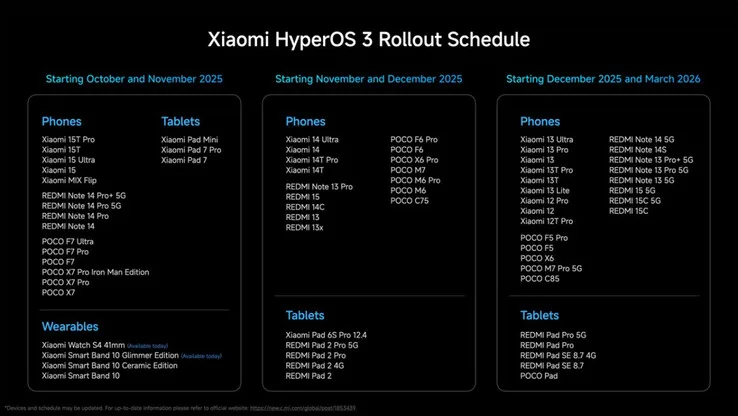
The Android 16 update may begin to go out to the other Poco phones in the first part of November 2025. Xiaomi has previously stated that HyperOS 3 will soon be accessible on a few tablets as well. Specifically, the upgraded software is scheduled to be released before December 2025 for the Pad Mini, Pad 7, and Pad 7 Pro.
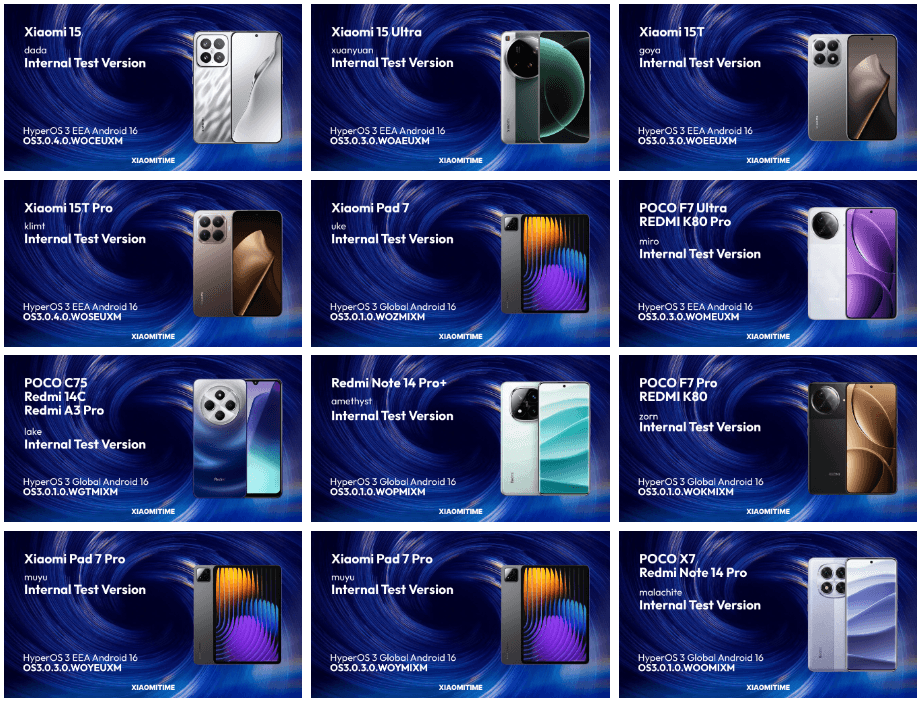
Returning to the just announced Poco F7 Ultra update, XiaomiTime reports that it is OS3.0.3.0.WOMEUXM. Although it can fluctuate, the file size is more over 7 GB. Before the end of November 2025, a few Redmi smartphones should also get the Android 16 upgrade. To find out more, see the rollout timeline that is included below.
It’s almost here—the moment we’ve all been waiting for! The first worldwide versions of Xiaomi’s eagerly awaited HyperOS 3 are predicted to be accessible in the next few days. With a number of potent AI improvements, substantial UI redesigns, and extensive performance optimizations, this is not merely a small update but rather a huge advancement.
This is the most thrilling news of the year for those who keep up with the most recent advancements in HyperOS. A larger selection of well-known phones and tablets are expected to get this update during the first week of November. The initial wave of devices has been confirmed. Prepare to enjoy a more intelligent, quicker, and user-friendly version of Xiaomi’s ground-breaking operating system.
HyperOS 3 update is first released on these devices.
HyperOS 3 Global versions for ten models have been produced by Xiaomi, suggesting that the global debut is near. These gadgets will be the first to demonstrate HyperOS 3’s capabilities to a global audience.
In October and November, Xiaomi intends to extend its HyperOS 3 Global program to a far greater variety of devices. Watch for the update message if you have any of the following!
Oppo’s ColorOS is the operating system that has produced the most feature-rich Android skins. The user experience is now significantly enhanced by the AI tools. Now, Oppo users are looking forward to the release of ColorOS 16. The most recent version of Android 16 will serve as its foundation. More efficiency, more features. This post will be helpful if you are currently considering an Oppo phone, such as the forthcoming Find X9 series. Additionally, this post will assist you in determining whether your current Oppo phone is eligible for the update. Let’s dissect all the information we require.
ColorOS 16 release date and rollout
On October 15, 2025, the ColorOS 16 was most recently announced worldwide. It will make its debut alongside the upcoming Find X9 series. Regarding the current devices, they will also progressively get the update. For devices like the Find X8 Pro, beta versions have already begun to roll out in a number of countries, including Malaysia, Indonesia, and India. Most likely, the stable update will be released on October 30, 2025. However, it won’t be accessible in India right away. It will be initially applied to China’s flagship gadgets. In India, the first stable ColorOS 16 upgrade is anticipated in Q1 2026.
Therefore, in order to avoid the wait when purchasing a new phone, opt for models that come pre-installed with ColorOS 16.
ColorOS 16 Features
We may claim that the core of Oppo’s ColorOS 16 is “Smart & Smooth” performance. Thus, anticipate speedier daily tasks, simpler multitasking, and assistance for content production. This may indicate that you should get an Oppo cellphone running ColorOS 16 if you want AI integration and smoothness over standard Android.
Performance
Oppo has concentrated on creating a sense of instantaneity in interactions. This one also uses ColorOS 15’s Parallel Animation, albeit with a minor improvement. Seamless Animation is a new feature in ColorOS 16. Here, your touch point is the natural starting point for gestures and app transitions.
It is powered by some important technology, such as:
Luminous Rendering Engine: Renders visuals in parallel for lag-free animations.
Trinity Engine: Optimises resources for gaming and heavy tasks.
Tide Engine: Reduces power use (by 13%) and lowers temperature (by 4.1°C).
Overall, we get faster boot times, smoother app launches and scrolling, and quicker tap responses.
Ai integration
Whether you agree or not, AI has made a significant impact. incorporating time-saving and productivity-boosting tools? Bring it on! If you use your phone for artistic or professional purposes, it will be ideal.
AI One-Tap Flash Note: Captures and organises notes from documents, videos, or bills. Also, summarises videos into chapters and automates expense tracking.
Xiaobu AI Assistant: Offers personalised briefings (weather, tasks, news). Suggestions based on your habits, real-scene dialogues via voice/gestures. Gives portrait lighting for better photos.
Productivity suite: AI Recording for transcriptions, AI Writing for drafts (emails, docs), AI Notes for templates. There’s handwriting conversion, and AI Calendar for task timelines too.
ColorOS 16’s AI improvements are its highlights. Anyone who believes that these AI tools may simplify their life by taking care of routine duties ought to give this operating system a try.
Additionally, there are some similarities to Google’s Gemini integration. The only difference is that this one is customized for the Oppo environment.
UI and Customisation
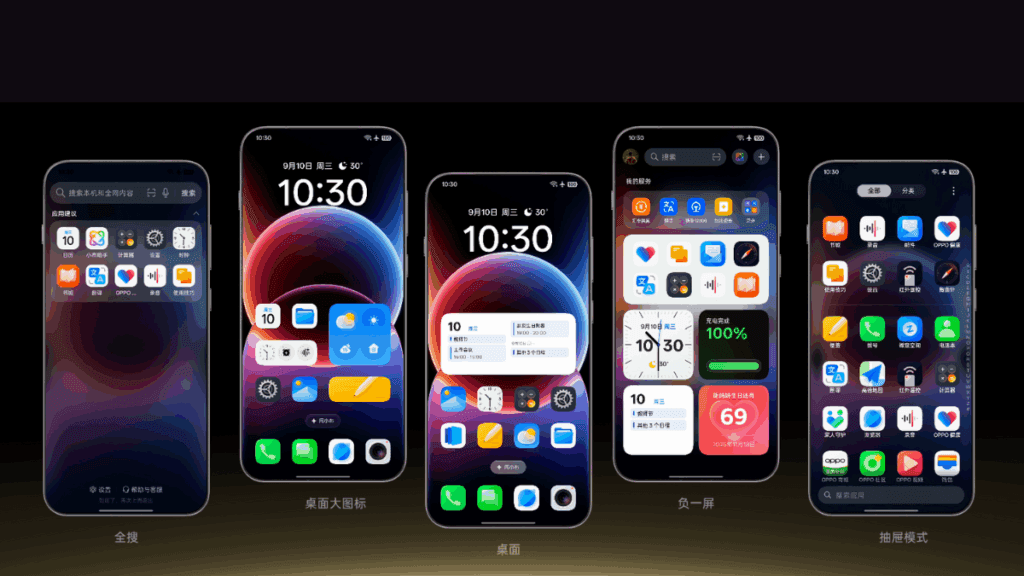
An OS’s user interface and degree of customization reveal a lot about it. Natural light and shadows served as inspiration for the ColorOS 16. Gradients, halos, and glows are used in the design to create a simple, intuitive appearance.
The notable ones are as follows:
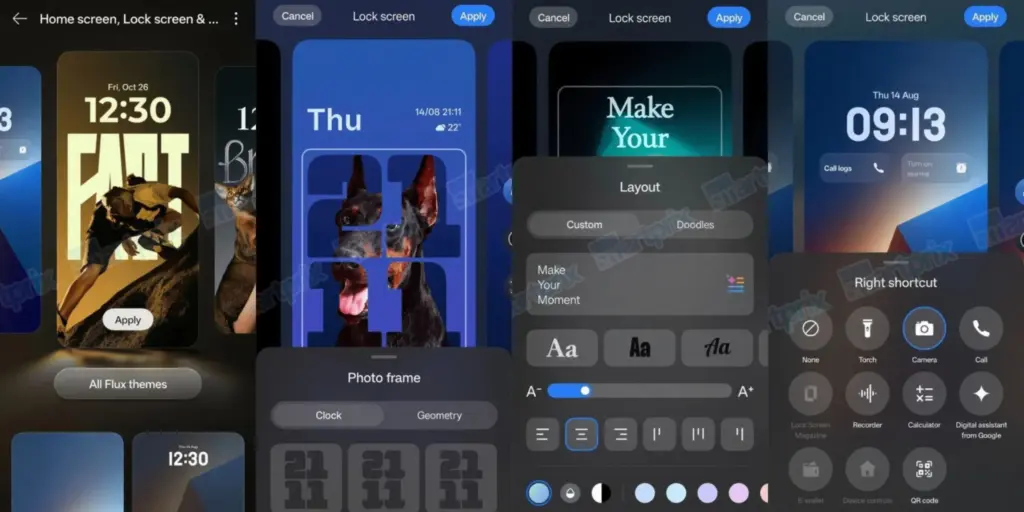
Flux Home Screen: Resize icons, folders, and cards dynamically. The layout adapts with fluid animations.
Full-Screen AOD: View your wallpaper with key info on the always-on display.
Personalisation: AI-generated themes, animated wallpapers from static images, and auto-matching icon colours.
Compared to many other competitors, these alternatives offer greater versatility if you enjoy playing with the look of your phone.
Photo and Video Editing
For people interested in photography, ColorOS 16 upgrades the Photos app with:
AI Portrait Glow: Enhances low-light portraits by optimising skin tones.
Other AI tools: Eraser, Unblur, and Reflection Remover.
Video editing: Master Cut for trimming, music, filters, and adjustments.
For those seeking effortless photography, some enjoyable settings include slow-motion effects, live collages, and collections of human and pet photos.
Cross-Device Connectivity
Seamless integration across ecosystems is a highlight:
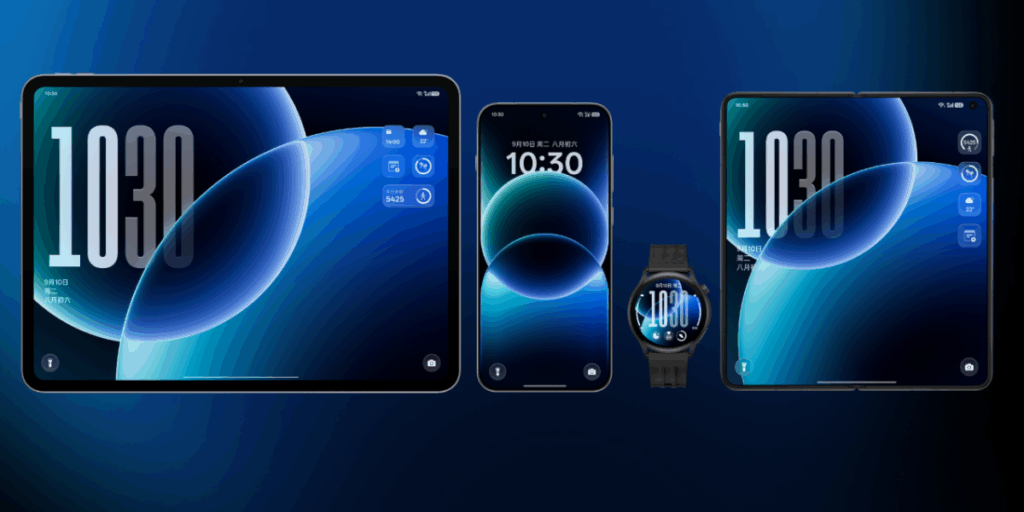
O+ Connect: Manage files and remote control between phone, Mac, or Windows PC.
Screen Mirroring: Cast up to five apps and control with a mouse/keyboard.
One-Tap Share: Transfer docs, notes, and more, including health data from Apple Watch.
Additional benefits include PC-level WPS Office, vehicle connectivity, customizable control center, and floating windows for multitasking.
There will still be seamless connectivity between your various devices if you have a mixed Apple/Android configuration.
Find N3 series Find X7 series Reno14 series Reno13 series Pad 4 Pro Pad 3 Pro OnePlus 12 Ace 3/5 series Pad Pro
December 2025
Find N2 series Find X6 series K13 Turbo series OnePlus 11 Ace 2 series
Q1 2026
Find X5 series Reno12 / 11 / 10 / 9 series (select models) K13 / K12 series Pad 3 / 2 / SE OnePlus 10 Pro Pad series
Your device might not get ColorOS 16 if it isn’t listed (for example, if it’s older than Find X5 or Reno9). If you truly enjoy them, you might want to upgrade to the newest features.
ColorOS 16 vs ColorOS 15
Since the current OS update isn’t that old, many people wonder if it’s worthwhile to upgrade to the next one. Check out the distinctions between ColorOS 16 and its predecessor ColorOS 15 if you’re experiencing the same confusion:
AI One-Tap Flash Note, Xiaobu (Briefing, Dialogue, Lighting), AI Writing/Notes/Calendar
AI Editor (Clarity, Eraser), AI Toolbox, Gemini Integration
UI Customisation
Flux Home Screen, Full-Screen AOD, AI themes
Aesthetic upgrades, smoother icons/widgets
Performance
Tide Engine (13% less power), Project Breeze for entry-level
Snappy responsiveness, fluid multitasking
Cross-Device
O+ Connect (Mac/Windows), 5-app mirroring
Touch to Share (iOS), basic multitasking
Photo/Video
AI Portrait Glow, Master Cut
AI Eraser/Unblur, basic editing
For deeper AI and efficiency advantages, especially on older hardware, ColorOS 15 is a worthy upgrade.
Every Oppo user has been waiting for ColorOS 16’s level of novelty. It combines customization, AI tools, and performance in more than subtle ways. Because of this, it is an appealing option for upgraders or new purchasers. For the complete experience, think about smartphones like the Find X9 if you’re in the market. Or upgrade your current gadget to make it last longer. Keep checking back here for more information about devices that qualify.
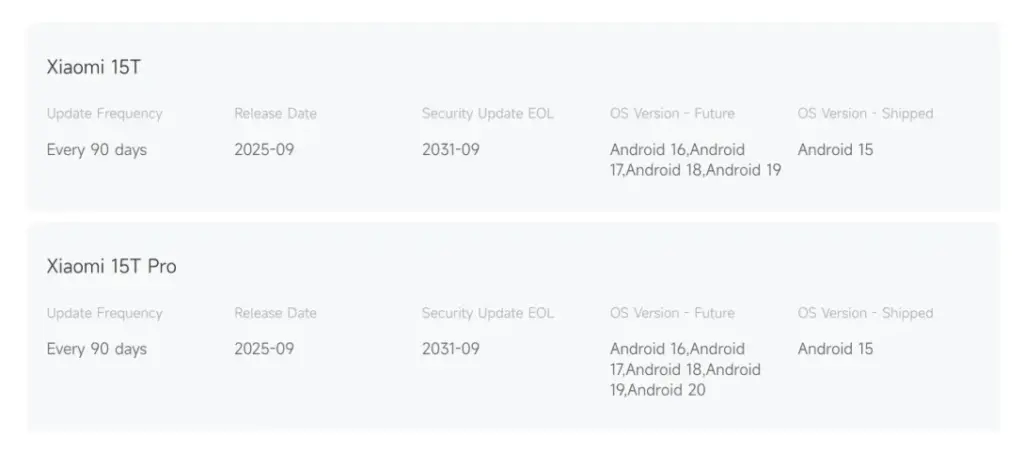
Xiaomi is acting bravely. According to reports, the Xiaomi 15T Pro will run Android 20, while the basic 15T would only run Android 19. Up to September 2031, system and security updates will be provided for both models. The majority of Android phones can only hope for seven years of support.
Seven Years of Updates — Really?
Seven years, indeed. The majority of top Android devices receive three or even four big updates. It’s obvious that Xiaomi is attempting to reinterpret what long-term support means. For consumers, that means their phone will remain quick, safe, and up to date for over ten years. Less travel to upgrade your device, let’s face it? That benefits the environment and your pocketbook.
Xiaomi’s ecosystem software, HyperOS 2.2, is installed on both 15T models. For these devices, HyperOS 3, which promises faster multitasking, more AI capabilities, and improved battery economy, is quickly approaching. In actuality, this implies that years later, your phone may still feel responsive. (Isn’t that good for an Android device?) It’s a smart move in comparison to other brands. It’s similar to Apple’s iOS strategy, but it’s used on a high-end Android phone. This might be a significant selling advantage for European and other markets where lifespan and resale value are important considerations.
Why is this important?
There is more to this than just updates. People’s perceptions of improvements are altered by phones that stay safe, quick, and feature-rich for seven years. In essence, you’re purchasing a gadget that will last. Xiaomi markets the 15T Pro as a high-end phone that fulfills its long-term durability guarantee.
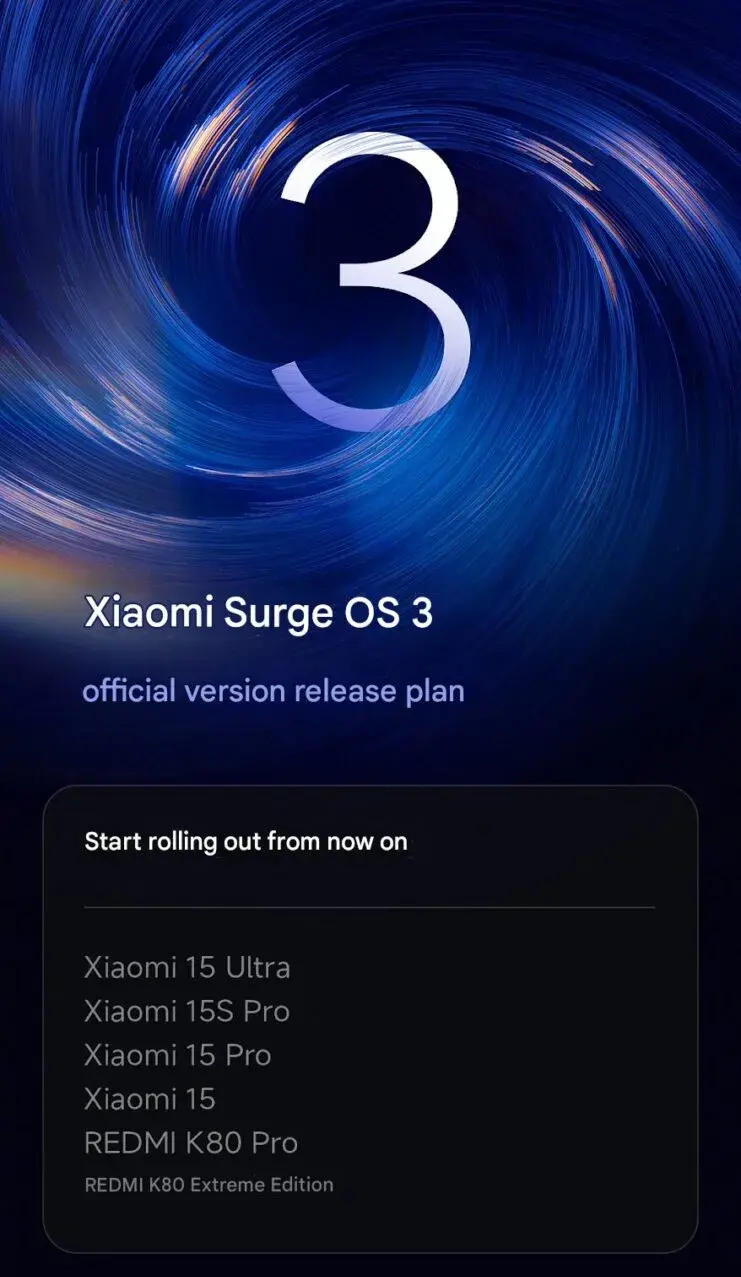
Following the initial beta release on August 25, 2025, Xiaomi has released the stable HyperOS 3 for six of its flagship devices in China. Better AI features, more fluid animation, and greater device unity across the Xiaomi platform are all included in the current upgrade, which represents the most recent advancement in Xiaomi’s system development. new week, the upgrade is anticipated to roll out globally in the models, marking the beginning of Xiaomi’s new generation of user interfaces.
he HyperOS 3 stable rollout’s initial roll out happens with the following devices in China:
Xiaomi 15 — OS3.0.2.0.WOCCNXM
Xiaomi 15 Pro — OS3.0.3.0.WOBCNXM
Xiaomi 15S Pro — OS3.0.4.0.WODCNXM
Xiaomi 15 Ultra — OS3.0.2.0.WOACNXM
REDMI K80 Pro — OS3.0.2.0.WOMCNXM
REDMI K80 Ultra — OS3.0.2.0.WONCNXM
The Xiaomi 15 series will soon be available globally, and these structures are currently housed in Xiaomi’s Chinese OTA server stores.
What’s New in HyperOS 3
In order to make the Xiaomi ecosystem more intelligent and connected, HyperOS 3 delivers a sophisticated UI along with a number of clever AI-enabled capabilities.
New look and new feel: new color scheme, fresh look and feel throughout the UI.
Hyper Island: Xiaomi’s interpretation of the Dynamic Island, providing smoother animation and better multitasking choices.
Cross-device synergy: effortless call, message, and screen-sharing integration between Xiomi smartphones, tablets, and laptops.
AirDrop-like file transfer: seamlessly exchange files just by bringing the Xiaomi devices nearer.
Better performance: 30% faster and more stable system tuning.
Improved AI capability
In the coming week, customers worldwide will begin receiving the upgrade, even though the initial rollout was restricted to Chinese versions. With this extension, Xiaomi has reaffirmed its commitment to offering coordinated worldwide update rollout dates that align with its ambitions for the whole HyperConnect ecosystem.
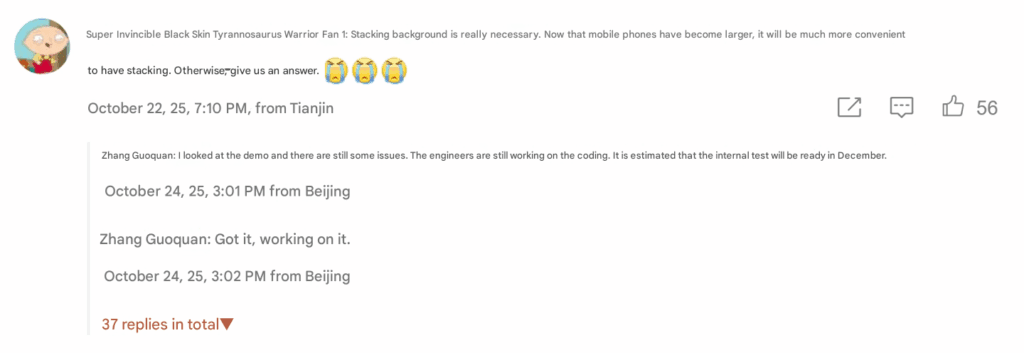
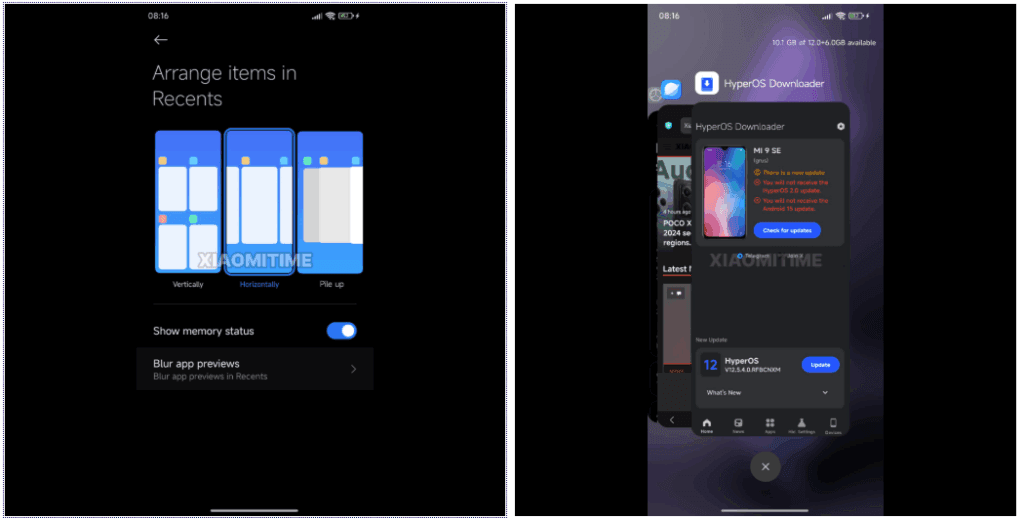
Zhang Guoquan, the director of mobile software for Xiaomi, has stated that the business will start testing the layered background interface in HyperOS internally in December. This impending update will improve Xiaomi phones’ multitasking capabilities by providing a more user-friendly and aesthetically pleasing background management experience. Through Zhang’s interactions with Weibo users, the functionality was made public, demonstrating Xiaomi’s ongoing dedication to enhancing the real-world user experience using HyperOS, the company’s unified operating system.
A Xiaomi devotee responded in a Weibo debate by calling for the inclusion of a stacked background interface, particularly given the larger screens of modern smartphones that necessitate more fluid multitasking capabilities. Zhang Guoquan replied, “Received, working on it,” to the comment. He then added that the functionality is currently in the demonstration stage but still undergoing optimization. The code is now being finished by programmers, and internal testing is expected to start in December.
Stacked Background Interface?
Users can see running apps as a deck of cards arranged on top of each other, from largest to smallest, depending on which card is accessed first thanks to the stacked background interface. Similar to the multitasking interfaces found in webOS (2009) and later in Apple’s iOS 9, users can swipe up to close apps or left or right to navigate between them.
In place of conventional grid-patterned task lists, this structure provides an interactive and spatial method of managing applications. It makes it possible to maximize screen real estate, which is particularly helpful on devices with large screens like the Xiaomi 15 Pro and Xiaomi Pad 7.
Originally developed in webOS, stacked multitasking was first used on phones like the Palm Pre, which also popularized features like wireless charging and gesture navigation, which are now commonplace on the majority of contemporary smartphones. This kind of multi-application management became popular once Apple adopted the UI in iOS 9.
With HyperOS, Xiaomi appears to be bringing back these antiquated ideas while modernizing them with fluid animations, AI enhancements, and improved performance scaling.
It is anticipated that the stacking interface will be included in HyperOS’s 2025 upgrades, maybe in the feature package that comes after HyperOS 3.1. When public testing starts, Xiaomi customers should anticipate smoother animations, more fluid multitasking, and better use of display real estate. These features are in line with Xiaomi’s overarching goal of using Xiaomi HyperConnect to build an intelligent, connected user ecosystem.